 By Claire Whitaker
Updated November 2026
Choosing a rod for bass fishing comes down to four things: rod length, power and action, the type of reel it pairs with, and how you plan to fish. This list weighs those criteria across spinning and casting setups, looking at manufacturer specs, brand reputation and common owner feedback rather than hands-on trials. Each pick is matched to a specific bass situation.
Best overall: Ugly Stik GX2 Spinning Reel and Fishing Rod Combo – View on Amazon
Best for beginners: Ugly Stik Complete Spincast Reel and Fishing Rod Kit – View on Amazon
Best for travel: Graphite Telescopic Fishing Rod Travel Combo – View on Amazon
Best for finesse lures: PLUSINNO Carbon Fiber Telescopic Combo – View on Amazon
Best for casting: Ugly Stik GX2 Casting Fishing Rod – View on Amazon
Best for twin-tip flexibility: KastKing Spartacus II Twin-Tip Combo – View on Amazon
Best for a complete starter kit: Telescopic Fishing Rod and Reel Combo with Tackle Box – View on Amazon
Our Top Picks
Quick Comparison
| Product | Best for | Key feature |
|---|---|---|
| PLUSINNO Fishing Rod and Reel Combo | Finesse lures | Carbon fiber telescopic build |
| Ugly Stik Complete Spincast Kit | Beginners | Spincast reel included |
| Ugly Stik GX2 Spinning Combo | Overall use | Balanced spinning setup |
| KastKing Spartacus II Combo | Twin-tip flexibility | Two interchangeable tips |
| Telescopic Rod and Reel Kit | Complete starter kit | Includes lures and tackle box |
| Ugly Stik GX2 Casting Rod | Casting setups | Baitcasting-style rod |
| Graphite Telescopic Travel Combo | Travel and portability | Collapsible graphite build |
PLUSINNO Fishing Rod and Reel Combo

PLUSINNO Fishing Rod and Reel Combos -24 Ton Carbon Fiber Telescopic Fishing Pole – Spinning Reel 12 +1 Shielded Bearings Stainless Steel BB-Free Carrier Bag Case, Travel Saltwater Freshwater Fishing
Best for: Finesse lures
A good fit for anglers who throw light jigs, drop shots and small plastics and want a rod that stays sensitive at short casting distances.
- Pros: Lightweight carbon fiber blank; spinning reel with 12+1 bearings
- Pros: Telescopic design packs down for transport
- Cons: Lighter power limits heavy cover fishing
Ugly Stik Complete Spincast Reel and Fishing Rod Kit

Ugly Stik 7’ Complete Saltwater Kit Fishing Rod and Reel Spinning Combo, Ugly Tech Construction with Clear Tip Design, 7’ Telescopic – 2-Piece Rod,Black
Best for: Beginners
Suited to new anglers and younger family members who want a simple push-button spincast reel that is easy to learn.
- Pros: Ready-to-fish kit with reel and rod matched
- Pros: Forgiving fiberglass-composite blank tolerates rough handling
- Cons: Spincast reels offer less casting control than spinning reels
Ugly Stik GX2 Spinning Reel and Fishing Rod Combo

Ugly Stik GX2 Spinning Reel and Fishing Rod Combo
Best for: Overall use
The most versatile choice here, covering shoreline, dock and boat fishing for largemouth and smallmouth bass across common lure types. 5 Best Bass Line Fishings: Top Picks for Every Angler (2026) goes further into this.
- Pros: Balanced power for a wide range of lures
- Pros: Spinning combo works well for beginners and experienced anglers alike
- Cons: Not as sensitive as premium graphite blanks for subtle bites
KastKing Spartacus II Twin-Tip Fishing Rod and Reel Combo

2-Piece Rods with Extra Tip, Spinning & Casting Combo, KastFlex IM6 Graphite Blanks, Fishing Poles and Reels Combo KastKing Spartacus II Twin-Tip Fishing Rod and Reel Combo
Best for: Twin-tip flexibility
Works for anglers who want one rod that handles both lighter spinning presentations and heavier casting by swapping the tip section.
- Pros: Extra tip section adds versatility
- Pros: Graphite blank offers good sensitivity
- Cons: Two-piece setup needs more care to keep tips aligned
Telescopic Fishing Rod and Reel Combo, Complete Kit with Lures and Tackle Box

Richary Telescopic Fishing Rod and Reel Combo, Complete Fishing Kit with Lures Tackle Box, Freshwater Saltwater Spinning Rod for Bass Trout Fishing Pole Beginner (5.2ft)
Best for: Complete starter kit
Aimed at first-time buyers who need rod, reel, lures and storage in one package for bass, trout and general freshwater fishing.
- Pros: Includes lures and tackle box, so nothing else is needed to start
- Pros: 5.2-foot telescopic rod is easy to store
- Cons: Kit-level components may not match serious bass tournament gear
Ugly Stik GX2 Casting Fishing Rod

Ugly Stik GX2 Casting Fishing Rod
Best for: Casting setups
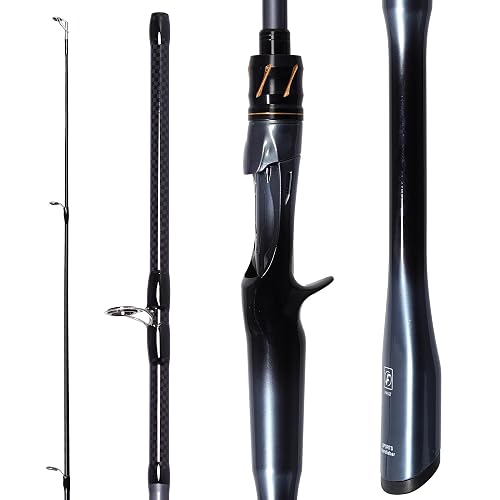
For anglers who already own or plan to buy a baitcasting reel and want a rod built for accurate casts to cover and structure.
- Pros: Casting-specific rod action suits baitcasters
- Pros: Durable build for heavier cover
- Cons: Requires a separate reel and some casting practice
Buying Guide
Rod Length and Power
Rod length affects casting distance and how well you control a lure. Shorter rods, around 5 to 6 feet, suit tight cover and smaller waters, while longer rods give more casting reach and leverage. Power refers to how much force the rod needs to bend, so a medium power rod is a versatile starting point for most bass.
Action
Action describes where the rod bends along its length. A fast action rod bends mostly near the tip, which helps with quick hook sets and precise lure placement. A slower action rod bends further down the blank and can be more forgiving for beginners and for certain soft-plastic presentations.
Reel Type and Compatibility
Spinning setups are easier to learn and handle light lures well, which makes them a good choice for newer anglers. Casting setups offer more accuracy and power for heavier lures, but they take more practice to avoid backlash. Make sure the reel seat and line rating match the reel you plan to use.
Portability and Intended Waters
If you travel or hike to remote spots, a telescopic or multi-piece rod will save space and fit in a small bag. If you fish mostly from a boat or a single dock, a one-piece or standard two-piece rod may feel more solid. Think about where you fish most often before choosing.
Build Materials and Included Gear
Rods are commonly made from fiberglass, graphite, or composite blends. Graphite tends to be lighter and more sensitive, while fiberglass is typically more durable and forgiving. Kits that include a reel, line, or lures can be a convenient way to start, but check whether the included components meet your needs.
FAQ
What length rod is best for bass fishing?
Most anglers do well with a rod between 6 and 7 feet for general bass fishing. Shorter rods work better in tight cover and boats, while longer rods help with casting distance from shore. Choose based on where you fish most often.
Is a spinning or casting rod better for beginners?
A spinning rod is usually easier for beginners because it is less prone to tangles and handles light lures well. Casting setups offer more accuracy but require more practice. Many new anglers start with spinning gear and move to casting later.
What power and action should I look for?
Medium power with a fast or moderate-fast action is a versatile choice for bass. It provides enough backbone for hook sets while still being sensitive enough to feel light bites. Adjust toward heavier power if you use larger lures or fish heavy cover.
Are telescopic rods good for bass fishing?
Telescopic rods are convenient for travel and storage, and they can work well for casual bass fishing. They are generally less sensitive than solid one-piece rods, so serious anglers may prefer a more traditional design. They are a practical option if portability matters most.
What line weight pairs well with a bass rod?
Check the line rating printed on the rod blank and stay within that range. Many bass anglers use lines in the 8 to 17 pound range depending on cover and lure size. Heavier line helps in thick vegetation, while lighter line allows for more natural presentations.
Conclusion
Beginners and casual anglers will get the most value from an all-in-one kit with a forgiving spinning setup, while those who want the easiest learning curve should lean toward a spincast or spinning combo. Anglers who value portability for hiking or travel should consider a telescopic travel combo.
Experienced anglers who want more accuracy and power for heavier lures may prefer a dedicated casting rod paired with a quality reel. Match your choice to your skill level, the waters you fish, and the lures you plan to throw.
Related reading
- Ugly Sticks Fishing Rod: A Buyer's Guide for Bass, Trout and Catfish
- Bucktail Jig Fishing Rod: How to Choose and Use One for Bass and Walleye
- Abu Garcia Vendetta Fishing Rod: Buyer's Guide for Bass and Trout
- Wall Mounted Fishing Rod Holders: 6 Steps to a Secure Install
About Claire Whitaker
Claire Whitaker is part of our editorial team and reviews and edits our freshwater fishing tackle on a budget guides, checking product details against manufacturer specifications and owner feedback.