As an Amazon Associate I earn from qualifying purchases. This page may contain affiliate links.
The best lures for river smallmouth bass are the ones that match current speed, water clarity and the forage smallmouth are eating at that moment. In practical terms, that means a short kit of tube jigs, hair-and-soft-plastic jigs, drop-shot worms, crawfish-pattern crankbaits, lipless vibrating baits and a few topwaters will cover nearly every river situation you’ll face. This guide explains how to narrow that list, rig each option and fish it where smallmouth actually hold.
Why River Smallmouth Are Different
Smallmouth in moving water behave differently than their lake-dwelling cousins. They position themselves behind current breaks, under ledges, on the downstream edge of boulders and in seams where fast water meets slack water. Because they have to expend energy holding in current, they tend to feed on items that drift or tumble past them, and they strike aggressively when a bait is presented in the right lane.
Most river smallmouth also live in clearer water than largemouth, which makes them wary of bulky or unnatural presentations. Your lure choice should reflect that: natural colors, realistic profiles and enough subtlety to fool a fish that has time to inspect what you throw.
Step 1: Read the River Before You Choose a Lure
Before tying on anything, spend a few minutes assessing the water. Three variables drive most of your decisions.
Current Speed
Fast current, roughly anything that pushes a bait downstream faster than you can comfortably retrieve, calls for heavier jigs and tube baits that stay on the bottom. Moderate current suits crankbaits, lipless baits and spinnerbaits. Slow or softer water near the banks is where topwaters and finesse presentations shine.
Water Clarity
In clear water, go smaller and more natural: 3-inch tubes, 3.5-inch craws and 4-inch rounded swimbaits in green pumpkin, smoke or crawfish tones. In stained or off-color water, increase size slightly and choose higher-contrast colors such as chartreuse, white or black-and-blue.
Depth and Structure
Map the depth changes and cover. Smallmouth typically sit in 3 to 12 feet on most rivers, though deep pools can hold fish much lower. Rock is primary cover; wood, undercut banks and current seams are secondary but productive.
Step 2: Build a Core Lure Lineup
You do not need thirty baits. A focused kit covering bottom, mid-depth and surface will handle most days. Here is a practical starting list.
- Tube jigs (1/4 to 3/8 oz): The workhorse for rocky, current-swept bottoms. Tubes wiggle naturally and resist snagging when hopped over rocks.
- Hair or soft-plastic jigs (1/4 to 1/2 oz): Pair with a craw trailer for a compact profile that smallmouth take readily on falls and drags.
- Drop-shot worms (4 to 5 inch finesse worms, 1/4 to 3/8 oz weight): Ideal in clear, deep water where fish are lethargic or pressured.
- Crawfish crankbaits (small diving models): Dig into rock and bounce off bottom structure. Smallmouth are crawfish specialists, and these baits match that diet.
- Lipless vibrating baits (1/2 to 3/4 oz): Cover water quickly and trigger reaction strikes over flats and along current edges.
- Topwater baits (walking baits and poppers): Best during low-light periods and in calm, slow sections of river.
Step 3: Match the Lure to the Situation
| Condition | Best Lure Choice | Why It Works |
|---|---|---|
| Fast current over rock | Tube jig or hair jig | Stays on bottom and resists being swept away |
| Clear, deep, pressured water | Drop-shot finesse worm | Subtle presentation that looks natural |
| Moderate current and riffles | Crawfish crankbait | Mimics forage and tracks along structure |
| Flats and slack water | Lipless vibrating bait | Covers ground and draws reaction strikes |
| Low light, calm banks | Walking topwater | Triggers aggressive surface feeding |
| Stained or off-color water | Chartreuse or black-and-blue jig | Higher contrast is easier for fish to find |
Step 4: Fish Each Lure Correctly
Tube and Jig Presentations
Cast slightly upstream and let the jig tumble and touch bottom. Keep your rod tip up and feel for the tick of rock contact. Hop the bait 6 to 12 inches with short lifts, then let it fall on a semi-slack line. Most strikes come on the fall or just as the bait settles.
Drop-Shot Finesse Fishing
Set the sinker about 6 inches to 2 feet below the hook, depending on how far off bottom you want the worm to hang. Shake the rod tip lightly to keep the worm dancing in place. Fish it along ledges and in pools with minimal movement.
Crankbaits and Lipless Baits
Cast across and slightly downstream, then retrieve so the lure ticks bottom or stays just above it. If the bait stops working, pause briefly to let it float up, then resume. For lipless baits, use a steady retrieve with occasional sharp pulls to create erratic action.
Topwater Walking Baits
Work the bait with a side-to-side cadence, pausing for two or three seconds between sweeps. Strikes often come during the pause, so be ready to set the hook the moment you feel weight.
Common Mistakes to Avoid
- Using lures that are too large in clear water, which spooks smallmouth before they commit.
- Fishing jigs in fast current without enough weight, leaving the bait skating over the fish.
- Ignoring the downstream side of rocks, where smallmouth wait to ambush food.
- Retrieving too quickly through prime lies instead of letting the bait ride the current.
- Setting the hook too slowly with braid-free setups; a firm, quick sweep helps with jigs and worms.
Tips for Better Results
- Fish upstream and cast past likely cover, then bring the lure through the strike zone naturally.
- Keep a few spare jig heads and trailers; rocks cost more hooks than fish.
- Rotate baits every 15 to 20 minutes on unproductive water rather than fishing one lure indefinitely.
- Take a moment to clean your lures after each outing so colors stay bright and hooks stay sharp. For a simple routine, see How to Clean Fishing Lures for Better Performance.
Recommended Gear
A handful of tools make river smallmouth fishing more productive and less frustrating.
- Fish lip grippers: A safe, controlled way to hold smallmouth for quick photos and release without handling the fish roughly. View on Amazon
- Fishing pliers: Essential for removing hooks from rock-snagged rigs and for crimping or cutting line quickly on the water. View on Amazon
- Polarized fishing sunglasses: Cut surface glare so you can read current seams, rock shapes and fish holding spots. View on Amazon
- Fluorocarbon fishing line: Low visibility and abrasion resistance help when fishing around rock in clear water. View on Amazon
Building a Lure Kit Without Overspending
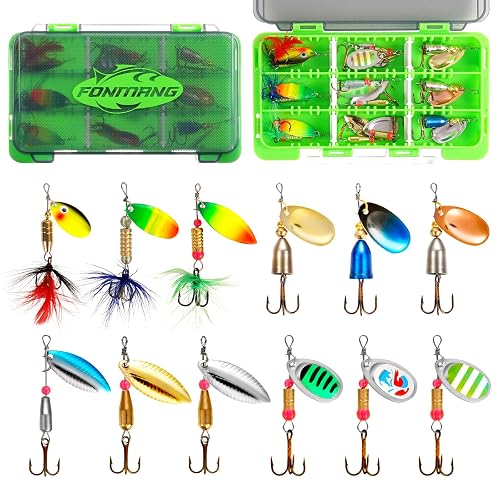
If you are just starting out, a good value lure set can cover several of the baits above in one purchase. For guidance on evaluating these sets, read How to Choose a Good Value Fishing Lure Set. Pair that with a sturdy box to keep rigs organized; a compartmentalized option from our guide to Best Fishing Tackle Boxes works well for river trips where you are wading and moving often.
For rigging tips that apply across these baits, see Texas Rig Setup with Bullet Weights for Bass Fishing and Jig Fishing Rigs and Techniques for Bass. If you want to dig deeper into soft plastics for river work, How to Fish with Soft Plastic Worms for Bass covers presentation details, and Soft Plastic Fishing Lures Explained helps you understand the differences between profiles.
FAQ
What is the single best lure for river smallmouth bass?
There is no universal answer, but tube jigs and hair jigs are among the most consistently productive options because they stay in the strike zone in current and imitate crawfish, a major smallmouth food source.
What color lures work best in clear river water?
Natural colors such as green pumpkin, smoke, watermelon and crawfish patterns tend to perform well in clear water. Keep presentations small and subtle.
Do I need different lures for stained water?
Yes, in most cases. Stained or murky water favors brighter, higher-contrast colors like chartreuse, white or black-and-blue, and slightly larger profiles that fish can locate more easily.
How deep do river smallmouth usually hold?
Many fish sit between 3 and 12 feet, but depth varies with season, water temperature and current. Always check the specific pools and ledges on the river you are fishing.
Are topwater lures effective on rivers?
They can be, especially in early morning, evening and low-light conditions in calmer, slower sections. In heavy current, subsurface baits usually outperform topwaters.
What rod and line setup is best for river smallmouth?
A medium-light to medium spinning or baitcasting setup with 6 to 10 pound fluorocarbon line is a common, versatile choice for most river lures. Adjust based on bait weight and cover.
How do I keep from losing lures on rocky river bottoms?
Use a weight just heavy enough to maintain bottom contact, keep your rod tip high when fishing jigs, and free snags by pulling from the angle you cast rather than straight up. Carry spare hooks and heads so a snag doesn’t end your day.
Conclusion
The best lures for river smallmouth bass are a focused group: tube and hair jigs for current, drop-shot worms for clear deep water, crawfish crankbaits and lipless baits for reaction strikes, and topwaters for calm low light. Read the current, water clarity and depth first, then choose the bait that matches those conditions. Start with a small, well-organized kit and refine it as you learn how the fish on your home river behave.