Quick answer
A good value fishing lure set provides a practical variety of lure types, decent hook quality, and useful storage, all tailored to the fish you’re most likely to catch. The goal is to get a versatile starting point without paying for lures you’ll never use.
For anglers looking to build a basic tackle box without breaking the bank, a pre-packaged fishing lure set can be a smart starting point. This buying guide for affordable fishing lure sets will help you navigate the options to find a kit that offers genuine utility rather than just a pile of random lures. We’ll focus on the key criteria that separate a thoughtful collection from a disappointing assortment.
Core Principles of This Buying Guide for Affordable Fishing Lure Sets
Value in a lure set isn’t about the sheer number of pieces. It’s about how many of those pieces you’ll actually tie on your line. A good set acts as a functional foundation, covering a range of common fishing scenarios you might encounter. Before you choose, it helps to have a clear idea of your primary targets and local water bodies. A set designed for pond bass will look different from one meant for river trout. For a broader look at lure types, our Fishing Lures category is a great resource.
Evaluating the Variety in a Lure Set
The first thing to assess is the mix of lures included. A one-note kit full of the same style lure offers little flexibility. Look for a set that provides options for different depths, retrieves, and conditions.
Essential Lure Categories to Look For
A versatile set often includes representatives from these core families:
- Topwater Lures: These create surface commotion and are exciting to use. Poppers or walking baits are common in kits.
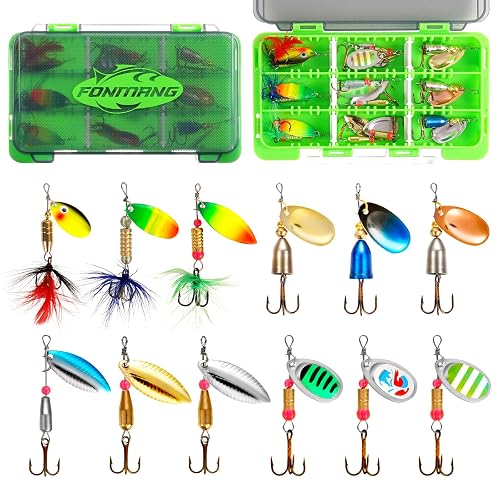
- Subsurface Moving Baits: Spinnerbaits, inline spinners, and crankbaits that dive and vibrate are workhorses for covering water and triggering reaction strikes.
- Soft Plastics: Worms, creature baits, or grubs paired with jig heads or hooks offer a slower, more finesse presentation. These are often the most replaceable part of a kit.
- Jigs: A basic lead-head jig, perhaps with a skirt, is a versatile tool for bouncing along the bottom.
A set with one or two lures from several of these categories is generally more useful than a set with ten lures from just one. Beginners can learn more about how these lures work in our dedicated Fishing Lures for Beginners article.
What to look for
- Balanced Selection: Does the set include lures for top, middle, and bottom of the water column?
- Color Logic: Look for a mix of natural hues (greens, browns, shad patterns) and brighter, high-visibility colors for stained water.
- Size Suitability: Lure sizes should generally match the common forage and fish in your area. A kit full of massive lures won’t help in a panfish pond.
Assessing Hook and Hardware Quality
This is where many budget sets cut corners. A lure is only as good as its hook. Poor-quality hooks can bend, rust quickly, or fail to penetrate, costing you fish.
- Sharpness: Hooks should feel sharp to a careful touch (run your fingernail across the point; it should catch). Dull hooks are a major handicap.
- Finish & Construction: Look for a smooth, uniform finish. Hooks that feel rough or have visible burrs may be brittle or corrode faster. The hook point should be aligned with the shank.
- Split Rings & Hardware: Check the connections. Split rings should be closed completely and turn freely. Swivels and attachment points should not be bent or misshapen.
You can often upgrade hooks later, but a set with decent stock hardware offers better out-of-the-box performance and represents better overall value. We also found 10 Best White Bass Fishing Lures: 10 Top Picks for Every Need (2026) useful on this point.
The Importance of the Storage Box
The container the lures come in is a functional part of the package. A flimsy box that cracks or doesn’t close securely will leave you with a tangled mess.
| Feature | Why It Matters |
|---|---|
| Secure Latches | Prevents the box from popping open in your bag, spilling lures everywhere. |
| Rigid Construction | A hard plastic box protects lures from being crushed and keeps hook points from poking through. |
| Adjustable Dividers | Allows you to customize compartments to fit different lure sizes and prevent tangling. |
| Water Resistance | While not fully waterproof, a well-sealed box helps keep moisture out, slowing rust on hooks and blades. |
Matching the Set to Your Local Fishing Conditions
This is the most critical step in this buying guide for affordable fishing lure sets. A “great deal” on a saltwater lure kit is worthless if you only fish freshwater lakes. Drill down further:
- Species: Are you after bass, trout, panfish, or walleye? General “freshwater” sets exist, but some are targeted.
- Water Clarity: For clear water, lean towards natural colors and more subtle actions. For stained or muddy water, look for kits with darker silhouettes or lures with strong vibration and sound.
- Structure: Fishing weedy ponds? A set with several weedless soft plastic options is key. Fishing rocky river bottoms? Look for lures that can handle occasional contact without snagging instantly.
Consulting your state’s fish and wildlife agency website or local fishing reports can give you excellent insight into what’s working in your area, helping you choose a kit that aligns with real-world conditions.
Safety
Always handle lures with care, especially when removing them from packaging or a tangled box. Sharp hooks can cause painful injuries. Keep lure sets stored securely away from children and pets. When fishing, be aware of your surroundings before casting to avoid hooking people, trees, or power lines. For safe boating practices, always refer to U.S. Coast Guard boating safety guidance.
FAQ
Are cheap lure sets worth it?
They can be, if you evaluate them carefully using the criteria above. They are excellent for beginners to experiment with different styles without a big investment, or for seasoned anglers to bulk up on disposable soft plastics or try a new color. The key is to manage expectations—focus on functional variety and hook sharpness over flawless finish or premium components. You may also like 10 Best Crappie Fishing Lures: 10 Top Picks for Every Need (2026).
How many lures should a good starter set have?
There’s no magic number, but a set with 10-20 lures that span 3-4 different categories (like topwater, crankbait, soft plastic, and a spinner) often provides a more practical foundation than a 50-piece bag of nearly identical items. It’s about useful diversity, not total quantity.
Can I upgrade the components in a budget lure set?
Absolutely. Swapping out hooks for sharper, stronger ones is a common and effective upgrade. You can also add split rings or replace worn hardware. This allows you to improve the performance of lures you like from the set, extending their life and effectiveness. A related read: 6 Best Fall Bass Fishing Lures for Cooling Water (2026).
How do I avoid buying a lure set full of “snags”?
Look at the lure designs. Sets heavy on exposed treble hooks or large, diving lip crankbaits are more prone to snagging in cover. Kits that include some weedless soft plastic rigs, inline spinners (which tend to run shallower), or lures with wire guards are better suited for snaggy environments. Consider your primary fishing spot when choosing.
Where can I learn more about using different lures?
Our Lure Buying Guides category offers focused articles on specific lure types and strategies. These guides complement this overview by diving deeper into technique and selection for individual scenarios.
References
- Manufacturer manuals and specification sheets: For details on lure care, recommended use, and hardware specifications.
- State Fish and Wildlife Agencies: For local fishing regulations, species information, and habitat guidance.
- U.S. Coast Guard: For official boating safety guidance and regulations. https://www.uscgboating.org/
- Take Me Fishing (RBFF): A resource for beginner fishing information and getting started. https://www.takemefishing.org/