By Paige Kingsley
As an Amazon Associate I earn from qualifying purchases. This page may contain affiliate links.
Choosing the right bass fishing lures Florida anglers actually use comes down to matching a small set of proven baits to the season, the water clarity, and the cover you’re fishing. This guide walks through the lure types that cover most situations in the state, explains how to pick colors and sizes, and gives you a short shopping list that won’t waste your budget. By the end, you’ll know which baits to start with and when to switch.
Why Florida Bass Fishing Lures Need a Different Approach
Florida is one of the few places where bass fishing happens year-round, and the conditions change dramatically. Lakes like Okeechobee and the spring-fed waters of north Florida can be clear and sandy one week and stained after a summer storm the next. Heat pushes bass into deeper, shaded water for much of the summer, while cooler months bring them shallow to spawn and feed. Water temperature, clarity, and vegetation density should drive your lure choice more than any single “hot” bait.
Florida also has an abundance of hydrilla, lily pads, and hyacinth mats. Lures that can be worked over and through this cover, such as weedless soft plastics and frogs, often outperform open-water baits that snag constantly.
Core Bass Fishing Lures for Florida Waters
Soft Plastic Worms and Creature Baits
A 6- to 7-inch worm rigged Texas-style is the workhorse of Florida bass fishing. It works around docks, grass edges, and laydowns, and it can be fished slowly in cold water or with a faster retrieve when fish are aggressive. Dark green pumpkin, watermelon seed, and black/blue are reliable colors in stained water, while lighter shades such as green pumpkin with chartreuse tails do well in clear lakes. For more on rigging options, see Texas Rig Setup with Bullet Weights for Bass Fishing and Soft Plastic Fishing Lures Explained.
Jigs for Heavy Cover
Jigs are the choice when you need to punch through thick vegetation or bang bottom structure. A 3/8-ounce football jig with a craw or flipping trailer covers a lot of ground in grass. Match the jig weight to depth and cover density: lighter jigs for shallow, open grass, heavier ones for deep structure or wind. Practical tactics are covered in Jig Fishing Rigs and Techniques for Bass.
Topwater Lures
Walking baits, poppers, and buzzbaits are most productive in early morning and late evening, especially in spring and fall. A buzzbait in white or chartreuse can draw strikes across shallow grass flats, and a walking bait works best over sparse cover where fish can see it clearly. Topwaters are less effective in deep, dirty water, so save them for shallow, clear periods.
Spinnerbaits and Crankbaits
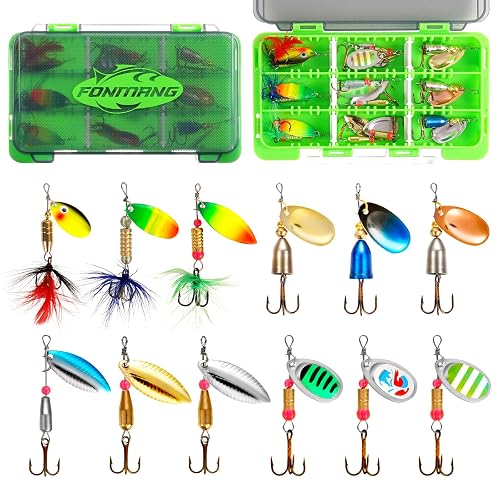
Spinnerbaits excel in stained water and around timber, where the blade flash and vibration help fish locate the bait. Crankbaits in shad or crawfish patterns suit rocky banks and points. Depth matters a great deal with crankbaits, so a depth chart helps you pick the right model; see Using a Crankbait Depth Chart for Consistent Fishing.
Frogs for Vegetation
Hollow-body frogs are the go-to lure over matted hydrilla and lily pads, which is exactly the kind of cover common across Florida. Fish them on heavy braided line and a stout rod so you can drive fish out of thick mats.
Choosing Colors, Sizes, and Tackle
Use a simple rule of thumb: darker colors in dirty water and bright or contrasting colors in clear water. Bass in heavily pressured Florida lakes often respond better to natural shad, bluegill, or crawfish patterns than to flashy colors.
| Water Condition | Suggested Lure | Color Direction |
|---|---|---|
| Clear, shallow grass | Weedless worm or frog | Green pumpkin, natural |
| Stained, shallow cover | Spinnerbait or buzzbait | White, chartreuse |
| Deep, open structure | Jig or crankbait | Black/blue, shad |
| Dirty, post-storm water | Creature bait or chatterbait | Dark, high-contrast |
For rods, a medium-heavy casting setup handles most Florida bass lures, and line choice depends on cover. Braid works best in heavy vegetation, while fluorocarbon suits clear water. Check Why Fishing Line Diameter Matters for Casting and Sensitivity to fine-tune your line size.
Step-by-Step: Building a Florida Bass Lure Lineup
- Start with two soft plastic baits (a worm and a creature bait) in natural colors.
- Add one jig in a 3/8-ounce weight and one crankbait for open water.
- Include a topwater (buzzbait or walking bait) for early and late bites.
- Add a spinnerbait in white and chartreuse for stained water.
- Pack a frog if you fish grass or lily pads regularly.
- Organize everything in a compartment box so you can change baits quickly. Ideas are in Using Utility Boxes for Fishing Lure and Tackle Storage.
Common Mistakes to Avoid
- Buying too many lures before learning how to fish the basics well.
- Ignoring water clarity when choosing colors.
- Using light line in thick cover, which leads to lost fish and lost lures.
- Fishing topwaters in the heat of midday in deep, dark water.
- Failing to clean lures after saltwater or brackish use, which can corrode hooks. Care tips are in How to Clean Fishing Lures for Better Performance.
Tips for Better Results
- Pay attention to water temperature: below about 60°F, slow down and use smaller baits.
- Fish the edges of grass, not just the middle, where bass ambush prey.
- Keep a few spare hooks and weights in your box; you will lose them.
- Check local regulations before fishing, since Florida rules vary by water body and season.
Recommended Gear
A braided line suited to heavy cover helps you drive bass out of grass without constant breakoffs. View on Amazon
A compartment tackle organizer keeps soft plastics and jigs separated and easy to reach on the water. View on Amazon
A medium-heavy casting rod gives you the backbone to fight bass through vegetation with frogs and jigs. View on Amazon
FAQ
What is the best all-around bass lure in Florida?
A 6- to 7-inch soft plastic worm in green pumpkin is among the most versatile choices because it works across many cover types and water conditions.
Do I need different lures for lakes and rivers?
Often yes. Rivers usually have current, so heavier jigs and crankbaits that hold bottom work well, while lakes may call for topwaters and frogs over grass.
What color works best for stained water?
Dark colors such as black/blue and high-contrast patterns, along with chartreuse and white spinnerbaits, tend to stand out in stained water.
When is the best time to throw topwater lures?
Early morning and late evening, particularly in spring and fall, are usually the most productive periods for topwater bites.
Is braided line necessary for Florida bass fishing?
It is not required, but braid is very helpful in heavy vegetation and for fishing frogs. Fluorocarbon is often preferred in clear water.
How many lures should a beginner carry?
A focused set of six to ten baits covering soft plastics, a jig, a crankbait, a topwater, and a spinnerbait is enough to learn the basics well.
Should I check regulations before fishing Florida lakes?
Yes. Size and bag limits and special rules differ by water body, so check current Florida Fish and Wildlife Conservation Commission guidance before you go.
Conclusion
The best bass fishing lures Florida anglers use are the ones matched to cover, clarity, and season. Start with a small core set of soft plastics, a jig, a topwater, and a spinnerbait, then add frogs if you fish vegetation. Learn how each bait behaves in different water, and your lure choices will become second nature.

About Paige Kingsley
Paige researches and writes buying guides and how-to articles on freshwater fishing tackle on a budget. Picks are based on product specifications, brand reputation and patterns in owner feedback, and are updated as new models come out.