By Paige Kingsley
As an Amazon Associate I earn from qualifying purchases. This page may contain affiliate links.
The most valuable fishing lures are the ones you actually throw, catch fish on, and keep in the box for years. This guide shows you how to judge a lure by what matters: versatility, durability, action in the water, and how well it fits the species and conditions you fish. By the end, you will know which lure types deliver the most fish per dollar and how to build a small, effective kit instead of a drawer full of baits you never tie on.
What Makes a Fishing Lure Valuable
Value is not the same as price. A lure that costs little but catches fish every trip is worth more than a premium bait that sits in the tackle box because it does not match the water you fish. When anglers talk about the most valuable fishing lures, they usually mean baits that cover several jobs: they work across seasons, they hold up to repeated strikes, and they produce action even when the fish are finicky.
Shopping for one? See our guide: 5 Best Bass Assassin Fishing Lures for Bass Anglers (2026).
Three qualities separate high-value lures from the rest:
- Versatility: The lure catches fish in more than one depth, speed, or cover type.
- Durability: Hooks stay sharp, paint or finish holds, and the body survives a few dozen fish.
- Action you can control: The bait does something useful at slow, medium, and fast retrieves, not just one.
If you are still deciding how to organize a starter kit, the article Fishing Lures for Beginners covers the basics of matching lures to skill level.
Core Lure Types That Earn Their Keep
Most experienced anglers rely on a short list of lure families. Each one has a job, and together they cover most freshwater situations.
Soft Plastics
Soft plastics are often the best value in a bass or panfish kit. A single 4- to 6-inch worm, creature bait, or paddle-tail swimbait can be rigged Texas-style, Carolina-style, or on a jighead. You can cut them, reshape them, and fish them through brush, grass, and rock. For a deeper look at how different shapes behave, see Soft Plastic Fishing Lures Explained.
Crankbaits
A medium-diving crankbait that runs 5 to 10 feet is one of the most productive baits you can own. It covers water quickly, triggers reaction strikes, and works in spring, summer, and fall. Look for a lure with a tight wobble and a bill that hits cover without snagging constantly. The guide 9 Best Fishing Lures for Largemouth Bass: Expert Picks for Every Need compares popular bass options by depth and action.
Spinnerbaits and Inline Spinners
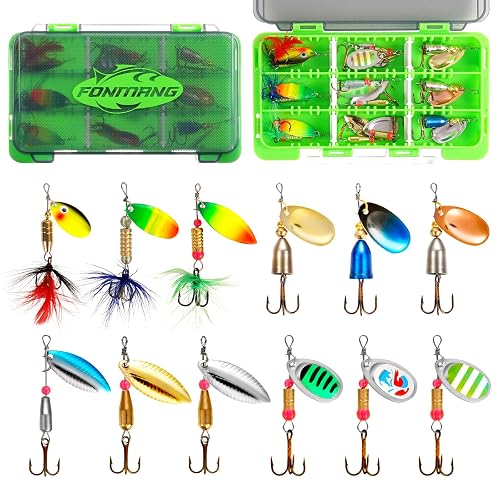
Spinnerbaits work in stained or muddy water and around timber, grass edges, and docks. The blade creates vibration and flash, so fish can find the bait even when visibility is low. A 1/4- to 3/8-ounce willow-blade spinnerbait covers most situations. Inline spinners, meanwhile, are inexpensive trout and panfish producers that handle streams and small lakes well.
Jigs
A plain lead-head jig with a skirt or trailer is a bottom-contact bait that catches bass, walleye, and crappie. Its weight lets you fish deep structure and steep banks. Jigs last a long time if you replace the skirt rather than the whole bait.
Spoons and Jerkbaits
Spoons are excellent for trout, pike, and open-water species. A 1/4-ounce spoon fluttering down can trigger strikes that other lures miss. Suspending jerkbaits do the same thing for suspended bass in cold or clear water. Both are worth adding once your basic kit is in place.
How to Build a High-Value Lure Kit: Step by Step
You do not need forty lures. A well-chosen set of eight to twelve baits, matched to your target fish, will outperform a large, random collection.
- Pick your primary species. Bass, trout, and catfish each respond to different baits. Start with the fish you chase most often.
- Choose two or three versatile lure families. A soft plastic, a crankbait, and a spinnerbait cover most bass water.
- Buy in two colors per lure. One natural color (green pumpkin, shad, or silver) and one high-contrast option (chartreuse, white, or firetiger) handles most light and water conditions.
- Add weights and hooks that match your bait. A 3/16-ounce jighead for a 4-inch worm is a common starting point; match the hook size to the bait’s profile.
- Test the lure in shallow, safe water first. Watch how it moves on a slow retrieve, a pause, and a fast burst before you rely on it in the field.
Factors to Check Before Buying
| Factor | What to Look For | Why It Matters |
|---|---|---|
| Hook quality | Sharp, corrosion-resistant points | Missed hookups waste the best lure |
| Body material | Durable plastic or balsa with a tough finish | Determines how many fish a bait survives |
| Running depth | Stated depth on the packaging or manufacturer specs | Lets you cover the water column you need |
| Color range | Natural and bright options | Handles changing light and clarity |
| Replaceable parts | Swappable skirts, blades, and trailers | Extends the life of the lure |
Matching Lures to Water and Season
A lure’s value depends on whether it fits the water in front of you. Clear water often calls for smaller, more natural profiles and slower presentations. Stained or muddy water rewards louder baits with vibration or flash. Cold water slows fish down, so a slow-moving soft plastic or a suspending jerkbait may outperform a fast crankbait. Summer heat pushes bass deep or into shade, which favors jigs and Carolina rigs. Fall often brings aggressive feeding, so faster-moving crankbaits and spinnerbaits shine again.
For guidance on choosing lures by water type, read How to Choose Fishing Lures for Different Fish and Water. If you are targeting bass in a specific season, Bass Fishing Lures for Early Spring: 7 Picks That Work Best (Step-by-Step) shows how seasonal patterns change the picks.
Keeping Your Lures Working Longer
Lure life depends heavily on care. Rinse baits after saltwater or muddy trips, dry them before storing, and keep them away from direct heat, which can warp soft plastics and fade finishes. Sharpen or replace dull hooks; a worn point can cost you more fish than a broken lure ever will. Store baits in compartments so hooks do not tangle or tear soft bodies. A simple cleaning routine after each trip stretches the value of every bait you own.
Storage matters too. A divided box or a utility-style case keeps lures organized and protected. See Using Utility Boxes for Fishing Lure and Tackle Storage for setup ideas, and How to Clean Fishing Lures for Better Performance for a step-by-step cleaning method.
Recommended gear
These tools help you get more life and more fish out of the lures you already own.
- Stainless split rings: Stronger than cheap rings and easier to swap when you change hooks or blades. View on Amazon
- Hook file or sharpener: A small diamond file keeps points sharp between trips so you lose fewer fish. View on Amazon
- Divided tackle box: Compartments keep soft plastics and hard baits from tangling and damaging each other. View on Amazon
- Snap swivels: Quick-change clips let you swap crankbaits and spinnerbaits in seconds without retying. View on Amazon
Common Mistakes
- Buying too many lures in one style instead of covering different depths and actions.
- Ignoring hook condition. A dull or bent hook is one of the most common reasons fish get away.
- Fishing the same bait the same way every time. Vary speed, depth, and pauses until you find what the fish want.
- Storing wet or dirty lures in closed containers, which can rust hooks and degrade soft bodies.
- Skipping line checks. Even the best lure cannot compensate for frayed or weakened line.
FAQ
What is the single most useful lure for a beginner?
A 4-inch soft plastic worm or creature bait on a light jighead is a strong starting point for bass. It is simple to fish, works in many conditions, and teaches you how bottom contact feels.
How many lures do I really need?
Most anglers can handle the majority of freshwater fishing with eight to twelve well-chosen baits. Start small and add lures only when you have a specific gap to fill.
Are expensive lures always better?
No. Action, hook quality, and how well a bait matches the water matter far more than brand or price. Many budget-friendly lures catch just as many fish as premium models when fished correctly.
Which lure color should I buy first?
Choose one natural color that resembles local baitfish or crawfish, plus one bright or high-contrast color for stained water and low light.
How often should I replace hooks?
Check hooks before every trip. Replace any that are rusted, bent, or no longer sharp. Frequent sharpening helps, but a damaged point should be swapped out.
Do lures lose effectiveness over time?
Yes, especially when finishes chip, soft plastics tear, or hooks dull. Regular cleaning and repairs keep a lure performing close to its original action.
Can I use the same lures for trout and bass?
Some can. Small spinners, spoons, and small crankbaits work for both, though you should adjust size and color to suit each species and water type.
Conclusion
The most valuable fishing lures are versatile, durable, and matched to the water and fish you target. Build a focused kit of a few lure families, test them carefully, and keep them in good working order. A small, well-maintained set will catch more fish over time than a large collection of baits you rarely use.

About Paige Kingsley
Paige researches and writes buying guides and how-to articles on freshwater fishing tackle on a budget. Picks are based on product specifications, brand reputation and patterns in owner feedback, and are updated as new models come out.