By Paige Kingsley
As an Amazon Associate I earn from qualifying purchases. This page may contain affiliate links.
Fishing lures for brown trout work best when you match the lure to the water, the season and the mood of the fish. This guide shows you which lure types cover most situations, how to pick sizes and colors, and how to work each one so you get more strikes. You will also find a checklist of gear, a comparison table and a list of mistakes that cost anglers fish.
Why Brown Trout Respond to Certain Lures
Brown trout are ambush feeders. They hold near cover, current breaks, undercut banks and deep runs, and they strike at prey that looks injured, vulnerable or suddenly out of place. Their diet shifts with the seasons: crayfish and sculpin in many rivers, minnows and baitfish in larger lakes, and a heavy dose of aquatic insects and terrestrials when the water is warm. A good lure imitates one of those food sources or triggers a reaction strike from a fish that is protecting its territory.
Shopping for one? See our guide: 5 Best Bass Assassin Fishing Lures for Bass Anglers (2026).
Light conditions matter too. Brown trout feed hard at dawn and dusk and often move into the shallows after dark. Under bright midday sun they tend to retreat to deeper or shadowed water, so lure choice and presentation need to adjust.
Step One: Read the Water and Season
Before you tie anything on, spend a few minutes looking at the water. Clear, shallow streams call for smaller, more subtle lures. Stained or high water calls for more vibration and flash. Deep, cold lakes often hold browns near structure in summer and push them shallow in fall when they spawn.
Seasonal Patterns
- Early spring: Water is cold and fish are sluggish. Slow-moving soft plastics and small jerkbaits fished near the bottom work well.
- Late spring and early summer: Insect hatches begin. Small inline spinners and lightweight crankbaits in natural colors are reliable.
- Mid to late summer: Fish move to deeper, cooler water or shaded banks. Crawfish-pattern crankbaits and heavier spinners fished deep are productive.
- Fall: Browns become aggressive ahead of spawning. Larger minnow imitations and vibrating lures covering water fast often produce the biggest fish.
Step Two: Choose the Right Lure Type
Most anglers do well with four categories. Each one covers a different job. For a deeper look, Trout Fishing Gear Guide: Spinning and Fly Setups covers this in detail.
Inline Spinners
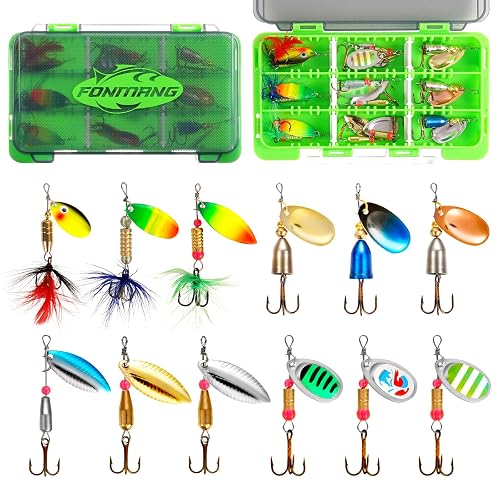
Inline spinners are among the most dependable fishing lures for brown trout in streams. The spinning blade creates flash and vibration that trigger reaction strikes, and the lure can be cast upstream and worked through current with very little effort. Sizes between 1/16 and 1/4 ounce cover most situations. For more detail on tactics, see Inline Spinner Fishing Tips for Trout and Panfish.
Small Crankbaits and Jerkbaits
Lipped crankbaits from about 2 to 3 inches imitate baitfish and crayfish. Suspending jerkbaits excel in cold water when you pause the lure and let it hover near the strike zone. A slow retrieve with occasional twitches is often more effective than a fast one.
Soft Plastics
Soft plastic minnows, grubs and crayfish imitations are versatile and inexpensive to replace after a few fish. Rigged on a jig head or a Texas rig with light weight, they can be bounced along the bottom in deep holes or slow-rolled through pools. If you are new to these, Soft Plastic Fishing Lures Explained covers rigging basics.
Small Spoons and Spinnerbaits
Spoons flutter on the fall and catch fish that are holding deep in lakes or tailwater sections. Small spinnerbaits in white or chartreuse can also work in stained water where browns need more visual signal.
Step Three: Pick Size and Color
Size usually matters more than color. As a starting point, match the lure length to the prey most common in your water. A 2-inch lure suits small streams, while 3 to 4 inches is better for larger rivers and lakes where big browns feed on bigger forage.
For color, use this simple rule: natural colors in clear water, brighter or higher-contrast colors in stained or low-light conditions. Brown, olive, gold and silver patterns mimic most trout foods. Chartreuse, pink and white stand out when visibility is poor.
Step Four: Present the Lure
Cast Upstream and Let It Drift
In moving water, cast upstream and at a slight angle, then reel just fast enough to keep the lure in contact with the current. Brown trout often sit facing upstream and will take a lure that passes naturally in front of them.
Vary Your Retrieve
Try three retrieves on each spot: steady, stop-and-go, and a pause at the end of the drift. Many strikes come right after a pause, when the lure is suspended or falling.
Work Structure Methodically
Cast past the target, bring the lure through the strike zone, and pass the same water at least twice with different lures or speeds before moving on.
Gear Checklist
- Light to medium-light spinning rod, about 6 to 7 feet
- Reel spooled with 4- to 6-pound fluorocarbon or monofilament
- Assortment of lures in 1/16 to 1/4 ounce inline spinners, 2- to 3-inch crankbaits and soft plastics
- Split rings and a few snaps for quick changes
- Needle-nose pliers and a small net
- Tackle storage with dividers for keeping lures organized
Keeping gear organized makes it easier to switch lures quickly. A compact Using Utility Boxes for Fishing Lure and Tackle Storage setup helps you find what you need without digging.
Quick Reference Table
| Lure Type | Best Season | Best Water | Retrieve Style |
|---|---|---|---|
| Inline spinner | Spring through summer | Streams and riffles | Upstream cast, steady drift |
| Small crankbait | Late spring and fall | Pools and undercut banks | Steady with pauses |
| Jerkbait | Cold water | Deep lakes and tailwaters | Twitch and pause |
| Soft plastic | All seasons | Deep holes and slow pools | Slow bounce or drag |
| Small spoon | Summer and fall | Lakes and cold tailwaters | Lift and fall |
Common Mistakes
- Using lures that are too big. Oversized lures spook fish in clear, shallow water.
- Retrieving too fast. Brown trout often follow a lure before striking, and a fast retrieve keeps them from committing.
- Ignoring pauses. A paused lure is frequently the moment of the strike.
- Fishing the same water with one lure. If nothing happens after several casts, change size, color or depth.
- Using heavy line in clear water. Light fluorocarbon makes a noticeable difference in spooky fish.
- Neglecting lure condition. Dull hooks and fouled blades reduce hookups. Clean and sharpen regularly, as explained in How to Clean Fishing Lures for Better Performance.
Recommended gear
A light spinning outfit paired with a small inline spinner covers most brown trout streams well. Look for a rod in the 6- to 7-foot range with a fast or moderate-fast action, which gives enough sensitivity for light bites.
- Light spinning rod: A rod around 6 to 6.5 feet with a light power rating helps you cast small lures accurately and feel subtle takes. View on Amazon
- Fluorocarbon line: Low visibility in water makes it a strong choice for spooky browns in clear streams. View on Amazon
- Inline spinner assortment: A mixed pack of 1/16 to 1/8 ounce spinners gives you options for different current speeds and depths. View on Amazon
- Small tackle box with dividers: Keeps spinners and soft plastics separated so they stay untangled. View on Amazon
Tips for Better Results
- Fish the first 30 minutes after sunrise and the last hour before dark.
- Keep a spare set of hooks and a few lures in a pocket in case one gets snagged.
- Wade quietly and keep a low profile, since browns are very sensitive to noise and shadows.
- Keep notes on what worked each trip. Patterns repeat more often than you would expect.
- Check local regulations on lure restrictions and barbless hooks before you fish.
FAQ
What are the best fishing lures for brown trout overall?
Inline spinners, small crankbaits and soft plastic minnows cover most situations. Start with a 1/8-ounce inline spinner in a natural or gold finish for streams and a 2- to 3-inch crankbait for lakes and deeper runs.
What size lure should I use for brown trout?
Most anglers use lures between 1.5 and 3 inches for brown trout. Smaller sizes work better in clear, shallow water, while larger lures can attract bigger fish in deep or stained water.
What color is best for brown trout?
Natural colors such as brown, olive, gold and silver work well in clear water. Brighter colors like chartreuse or pink are useful when water is stained or light is low.
Do brown trout hit lures at night?
Yes. Larger browns often feed actively after dark, especially in lakes and slower rivers. Dark-colored lures and slow retrieves are common choices for night fishing.
Should I use fluorocarbon or monofilament line?
Fluorocarbon is less visible underwater and is often preferred in clear water. Monofilament is more forgiving and floats, which some anglers prefer for surface presentations.
How do I fish a lure in fast current?
Use a heavier lure, such as a 3/16- or 1/4-ounce spinner, and cast upstream. Keep the rod tip up and let the current carry the lure toward you while maintaining light contact.
Are soft plastics effective for brown trout?
Yes, particularly in deeper water and during cold months. Rig them light on a jig head and bounce them along the bottom near structure.
Conclusion
Fishing lures for brown trout become much more effective when you match the lure to the season, water and feeding pattern. Start with a few reliable options such as inline spinners, small crankbaits and soft plastics, then adjust size, color and retrieve based on what the fish show you. Keep your tackle organized, present your lures carefully and take notes so you can repeat what works.

About Paige Kingsley
Paige researches and writes buying guides and how-to articles on freshwater fishing tackle on a budget. Picks are based on product specifications, brand reputation and patterns in owner feedback, and are updated as new models come out.