Quick answer
Fishing snaps and clips are small, reusable connectors that let you change lures in seconds without retying knots. Different designs offer varying balances of speed and security, with strength ratings provided by the manufacturer to match your line and target fish.
If you’ve ever wanted to switch lures quickly without the hassle of cutting line and tying a new knot, you’re in the right place. This guide to fishing snaps and clips explained will walk you through how these small pieces of terminal tackle work, the common types you’ll find, and how to pick one that keeps your lure secure while saving you precious fishing time. They are a staple in many anglers’ tackle boxes for their sheer convenience.
What Are Fishing Snaps and Clips?
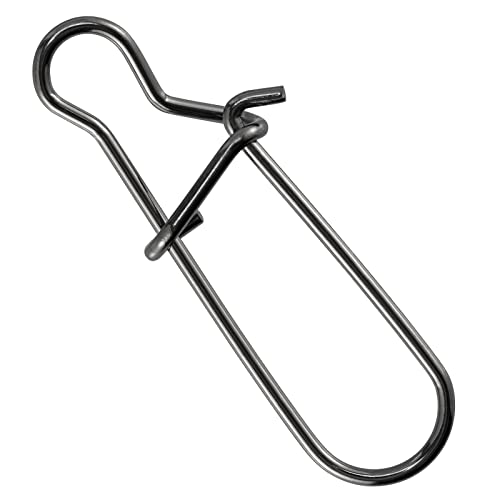
At their core, fishing snaps and clips are small, reusable metal connectors. One end has a loop or eye that you tie your main line or leader to with a secure knot. The other end features a spring-loaded or pressure-locked gate that opens to accept the eye of a lure, spoon, or swivel, and then closes to hold it firmly. The primary job is to allow for rapid lure changes. Instead of cutting your line and retying a knot every time you want to try a different bait, you simply open the clip, swap lures, and close it. This protects your main line from being shortened by repeated knot-tying and lets you experiment with presentations much faster.
It’s important to understand that while they add a connection point, a good snap should be strong and reliable. They are part of the broader world of other terminal tackle that includes items like swivels and split rings. In fact, many snaps come pre-attached to a swivel, creating a snap swivel, which serves the dual purpose of connecting lures and reducing line twist.
Common Types of Fishing Snaps and Clips
Not all snaps are created equal. The design of the gate—how it opens and closes—determines its ease of use, security, and best applications. Here are the most common types you’ll encounter.
Snap Swivels
This is a two-in-one component: a snap on one end and a barrel swivel on the other. The swivel is designed to rotate independently, which helps prevent line twist when using lures that spin, like inline spinners or certain spoons. They are incredibly common and versatile. However, because they incorporate a swivel, they are bulkier than a plain snap. This added hardware can sometimes affect the action of more subtle lures, so they are often best for active, reaction-style baits where a little extra flash and vibration aren’t a problem.
Duo-Lock Snaps (aka Interlock Snaps)
Recognizable by their folded, double-wire gate, Duo-Lock snaps are a popular choice for their balance of security and ease of use. To open, you press down on the end of the gate where it tucks into the main body. This design provides two points of contact when closed, making it very resistant to accidentally popping open under pressure. They are a great all-around choice for many freshwater applications, from crankbaits to topwater plugs. Their relatively low profile doesn’t interfere too much with lure action.
Coastlock Snaps (aka Tactical Angler Clips)
These snaps feature a gate that slides or “clicks” into a locked position, often with an audible sound. To open, you typically pull back on a tab or sleeve to release the gate. The locking mechanism is very positive, making these one of the most secure snap designs available. They are a favorite for saltwater anglers and those targeting large, powerful freshwater fish where failure is not an option. The trade-off is that they can be slightly trickier to manipulate with cold or wet fingers compared to a simple duo-lock.
Other Designs
You may also see simple spring clips, which have a wire gate held closed by spring tension, and cross-lock snaps, which have a gate that closes across the opening. Each has its proponents, but the duo-lock and coastlock styles are generally the most widely recommended for their reliable performance.
| Snap Type | Key Feature | Best For | Consideration |
|---|---|---|---|
| Snap Swivel | Built-in rotating swivel | Spinning lures (spinners, spoons) | Bulkier; can affect subtle lure action |
| Duo-Lock Snap | Double-wire locking gate | All-around freshwater use (crankbaits, plugs) | Good balance of security and ease of use |
| Coastlock Snap | Positive slide-to-lock mechanism | Heavy-duty applications, big fish, saltwater | Very secure but can be harder to open |
How to Choose the Right Snap or Clip
Selecting a snap isn’t just about grabbing the first one you see. A thoughtful choice considers strength, size, and the type of fishing you do. Here’s what to look for.
What to look for
- Strength Rating: Always check the manufacturer’s stated strength rating (usually in pounds). This number should exceed the breaking strength of your main line. If you’re using 10-pound test line, choose a snap rated for at least 10-15 pounds. For heavy-duty fishing, a much higher rating is prudent.
- Size/Profile: Match the size of the snap to your lure and line. A huge snap on a tiny finesse jig will look unnatural and may hinder action. Conversely, a tiny snap on a large swim bait is a weak point. The snap should be just large enough to easily accept the lure’s eyelet.
- Material & Finish: Snaps are typically made from stainless steel, brass, or coated metals. Stainless offers excellent corrosion resistance, especially important for saltwater or brackish use. A black or dark finish can be less visible in clear water.
- Gate Action: Test the gate before you buy (if possible) or when you load your tackle box. It should open smoothly and snap shut with a positive feel. A gate that is too loose is a liability.
The core decision often boils down to the trade-off between speed and security. A very easy-to-open snap gets lures changed fastest but might be more prone to failure. A super-secure, locked snap inspires confidence but takes more time and dexterity to operate. For casual panfish or bass fishing with standard lures, a duo-lock snap offers a great middle ground. For trolling big lures for muskies or fishing in heavy cover for snook, the absolute security of a coastlock is worth the extra effort.
Remember, the snap is a critical link in your system. It’s connected to your leader or main line and is responsible for holding your often-expensive lure. Don’t skimp on quality here.
Using Snaps and Clips Effectively and Safely
Proper use is just as important as proper selection. Always tie your line to the snap’s eyelet using a reliable knot like a Palomar or Improved Clinch Knot, and moisten the line before tightening. Ensure the knot is snug against the snap’s eye.
Safety
Before every fishing trip, and especially after catching a fish or snagging bottom, inspect your snap. Look for any signs of bending, corrosion, or a weakened gate spring. A bent or damaged snap is a failure point and should be replaced immediately. Never exceed the manufacturer’s stated strength rating for the snap, as this can lead to unexpected break-offs. When changing lures, be mindful of any hooks; point them away from you and others.
When attaching a lure, make sure the gate is fully and securely closed. Give it a gentle tug to confirm. For snaps with a locking mechanism (like coastlocks), listen and feel for the positive “click” or lock. It’s also worth noting when not to use a snap. Very finesse presentations for wary fish, like drop-shotting or using a wacky rig, often call for a direct tie to maximize natural movement. Similarly, some topwater lures with specific walking or popping actions may perform better tied directly.
For techniques where you might use a slip bobber, a snap isn’t typically used on the terminal end, as the lure or hook is tied directly below the float. Snaps are more for connecting lures that you plan to change frequently.
Fishing Snaps and Clips Explained: FAQ
Do snaps and clips weaken my fishing setup?
Any additional connection point is a potential weak spot, but a high-quality snap chosen for its appropriate strength rating should not be the failing part of your setup. The key is to ensure the snap’s rating meets or exceeds your line’s strength and to inspect it regularly for wear. A good snap is far stronger than the risk of knot failure from constantly retying your line.
Can I use a snap with a wire leader?
Absolutely. In fact, for toothy fish like pike or muskie, a snap is often pre-attached to a wire leader. You would tie your main line to the other end of the leader. This combines the abrasion resistance of the wire with the convenience of a quick-change snap. Ensure both the leader and the snap are rated for the fish you’re targeting.
What’s the difference between a snap and a swivel?
A snap is designed to connect and disconnect lures quickly. A swivel is designed to rotate and prevent line twist. A snap swivel combines both functions. If your main goal is preventing twist from a rotating lure, a swivel is the tool. If your main goal is changing lures fast, a snap (or snap swivel) is the tool.
How often should I replace my fishing snaps?
There’s no set timeline, as it depends on use and exposure. Replace a snap immediately if you see any corrosion, if the gate doesn’t close securely, if the metal is bent or nicked, or after it has endured a particularly heavy strain (like freeing a major snag). Regularly cycling through and inspecting your terminal tackle is a good habit.
Are there snaps for specific lures?
While most snaps are general-purpose, some anglers prefer certain styles for specific lures. For example, the low-profile duo-lock is often recommended for crankbaits to allow their built-in action to shine, while a sturdy coastlock might be chosen for heavy jigs or large swimbaits. It’s part of the broader strategy of selecting the right terminal tackle for the job.
References
- Manufacturer manuals and specification sheets: For correct strength ratings, usage, and safety information for snaps and clips.
- Take Me Fishing: A resource for general fishing how-to and safety information. https://www.takemefishing.org/
- U.S. Fish and Wildlife Service: Provides information on fish species and conservation. https://www.fws.gov/program/fish-and-aquatic-conservation
- U.S. Coast Guard Boating Safety: For safety guidelines when fishing from a boat. https://www.uscgboating.org/