Quick answer
Fishing swivels are small metal connectors with a rotating eyelet. Their primary purpose is to prevent line twist caused by lures that spin, allowing your main line to stay untangled and your bait to move naturally. Knowing what are fishing swivels used for helps you choose the right type for different fishing situations.
In the world of terminal tackle, few components are as small yet as critical as the fishing swivel. These unassuming metal connectors solve one of the most common and frustrating problems anglers face: line twist. Whether you’re a beginner dealing with a tangled mess or a seasoned angler looking to refine your setup, understanding what are fishing swivels used for is fundamental. They are not just simple connectors; they are a key piece of engineering that protects your line and improves your presentation. This article will explain the mechanics behind how swivels work, break down the main types you’ll encounter, and outline the specific fishing situations where each one becomes an essential tool in your tackle box.
The Core Problem: What Are Fishing Swivels Used For?
At its heart, a fishing swivel is designed to rotate. It typically consists of two metal eyes connected by a central barrel or housing that allows one side to spin independently of the other. This simple action addresses a fundamental issue. Many lures, like inline spinners or certain spoons, are engineered to spin rapidly in the water to attract fish. If this spinning lure is tied directly to your main fishing line, every rotation transfers twist directly into your line. Over a short period, this can cause severe line twist, leading to tangles, reduced casting distance, weakened line strength, and a less natural presentation of your bait.
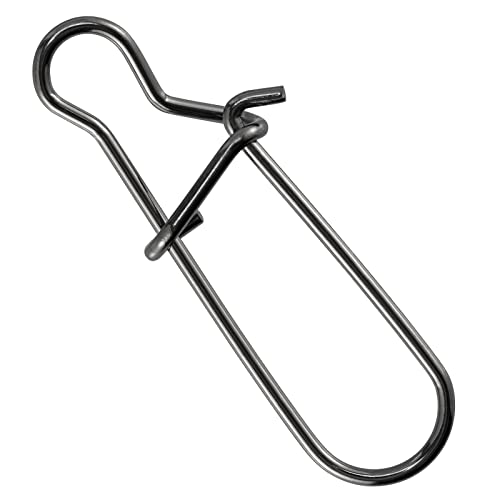
By placing a swivel between your main line and your leader or lure, the spinning happens at the swivel, not your line. The lure can rotate freely on one end of the swivel while your main line remains untwisted on the other. Beyond preventing twist, swivels also serve as a convenient connection point. They make it easy to change out lures or leaders quickly, especially when used in conjunction with a snap or clip. However, it’s crucial to remember that their primary and most important job is rotation. Not all swivels are created equal, and their ability to perform this job under pressure varies by type.
Main Types of Fishing Swivels
Swivels are categorized by their internal mechanism and shape, which determine their strength, smoothness of rotation, and best applications. Here are the three main types you’ll find as part of your other terminal tackle.
Barrel Swivels
The barrel swivel is the most common and economical type. It features a simple, two-piece barrel-shaped body that twists around a central wire. They provide basic rotation and are perfectly adequate for many light to medium-duty freshwater situations where the lure doesn’t spin excessively fast or under heavy load. They are a great all-purpose choice for beginners. However, under significant tension or with very fast-spinning lures, the friction inside a basic barrel swivel can cause it to “lock up,” failing to rotate and allowing twist to transfer up the line.
Ball Bearing Swivels
Ball bearing swivels are the high-performance option. Inside their housing, tiny ball bearings allow the connection eyes to spin with minimal friction, even under heavy load. This design makes them exceptionally smooth and reliable. They are the go-to choice for techniques that involve fast, consistent lure rotation (like trolling with large spoons or dodgers) or when targeting strong, hard-fighting fish. Their superior performance comes with a higher cost and slightly larger profile, but for preventing twist in demanding situations, they are often considered essential.
Crane or Coastlock Swivels
Recognizable by their angular, crane-like shape, these swivels offer a very strong connection point. The design places less stress on the swivel’s axis compared to a barrel swivel. While they do rotate, their primary advantage is strength and security, making them popular for leader connections in heavy-duty saltwater applications or for big catfish and pike. They are excellent for connecting two lines where twist prevention is a secondary concern to having a robust, reliable knot-holding interface.
| Swivel Type | Best For | Key Consideration |
|---|---|---|
| Barrel | Light tackle, casual fishing, budget-friendly setups | May lock under high tension or speed |
| Ball Bearing | Fast-spinning lures, trolling, heavy loads | Superior rotation, but larger and more expensive |
| Crane / Coastlock | Heavy leaders, big fish where strength is paramount | Strong connection; rotation is a secondary feature |
When to Use a Fishing Swivel
Understanding what are fishing swivels used for means knowing the right time to tie one on. Using a swivel when it’s not needed can add unnecessary bulk and potentially spook fish in clear water. Here are the specific situations where a swivel is highly recommended or essential.
What to look for
- With Spinning Lures: This is the non-negotiable use case. Any lure designed to rotate—such as inline spinners, spinnerbaits (for the blade arm), or certain spoons—requires a high-quality swivel, preferably a ball bearing type, to prevent line twist.
- Live Bait Rigging: When using live bait like minnows that swim in circles, a swivel helps absorb the twisting motion so it doesn’t transfer to your main line.
- Trolling: Trolling often involves lures that spin or dart erratically. A swivel is crucial to prevent cumulative twist over long periods of dragging the lure behind a moving boat.
- Bottom Fishing with a Sliding Sinker: In a Carolina or fish-finder rig, where the weight slides on the line above the hook, a swivel is used as a stop. It prevents the weight from sliding down to the hook, allows the bait to move naturally, and can also help mitigate any minor twist.
- Connecting Different Line Types: When using a wire or heavy fluorocarbon leader to prevent bite-offs from toothy fish, a sturdy swivel (like a crane swivel) provides a reliable connection point between it and your main braided or monofilament line.
There are also times when you should generally avoid a swivel. When using lures that require a very direct, sensitive connection for proper action—like most crankbaits, jerkbaits, or soft plastics rigged on a jig head—a direct tie is better. The swivel can dampen the subtle action the lure maker intended. Similarly, in ultra-clear water where finesse is key, the extra hardware might be visible to wary fish. For general terminal tackle setups, consider the swivel a specialized tool, not a default connector.
Safety
Always inspect your swivels for wear, corrosion, or deformation before use. A failed swivel can lead to lost fish and potentially create a hazardous situation if under high tension. When in doubt, or if you see any cracks or rough spots on the metal, replace it. Follow the manufacturer’s specifications for recommended line strength, and never exceed it. For boating safety, always consult resources like the U.S. Coast Guard.
FAQ: Common Questions About Fishing Swivels
Do I need a swivel with a spinnerbait?
Typically, no. A standard spinnerbait has a safety-pin design where the blade(s) rotate on a wire arm separate from the line-tie. This design generally does not cause line twist, so you can tie it directly to your line. However, some anglers use a swivel with a spinnerbait to help it run true or achieve a slightly different action, but it’s not required for twist prevention.
Can I use a swivel with a bobber?
It depends on the rig. For a simple fixed bobber rig with a hook and worm, a swivel is usually unnecessary. However, in more complex slip-bobber rigs for deep water or when using a live minnow that may spin, a small barrel swivel placed above the leader can be helpful to manage twist and keep your main line organized.
What size swivel should I use?
Match the swivel size to your line strength and the size of your lure or bait. A swivel that is too large can be cumbersome and affect lure action, while one that is too small may fail under pressure. Manufacturer packaging usually suggests a line test range. A good rule of thumb is to use the smallest swivel that is rated for the strength of your line and the fight you expect from your target fish.
Do swivels scare fish?
In very clear water or when targeting highly pressured, finicky fish, any extra hardware can be a concern. In these finesse situations, a direct tie or a fluorocarbon leader tied directly to the lure is often better. For most fishing, especially in stained water or with aggressive predators, a properly sized swivel is unlikely to deter strikes.
How do I tie a line to a swivel?
Use a reliable knot that maintains strength. The Improved Clinch Knot, Palomar Knot, or Uni Knot are all excellent choices for tying monofilament or fluorocarbon to a swivel eye. For braided line, use a knot like the Palomar or a modified Uni Knot that cinches down well on the smooth metal. Always moisten your knots before tightening to prevent friction heat from weakening the line.
References
- Manufacturer manuals and specification sheets: For proper use, line ratings, and safety information for swivels and other tackle.
- Take Me Fishing: A resource for general fishing education and getting started. https://www.takemefishing.org/
- U.S. Coast Guard: For official boating safety guidelines. https://www.uscgboating.org/