 By Ethan Brooks
Updated November 2026
Wire bending pliers for fishing lures help you form split rings, bend hook eyes, tune spinner arms and build custom rigs without damaging your tackle. The right pair depends on how fine your wire is, whether you need a looping or gripping tool, and how comfortable the handles feel over a long session. The picks below are ranked by fit against those criteria, based on product listings, brand reputation and owner feedback patterns.
Our top picks at a glance
- 1
 TOP CHOICEBest overallBeadsmith Wire Looping PliersView on Amazon
- 2
 TOP CHOICEBest for bail forming8inch Bail Making Pliers 6 StepView on Amazon
- 3
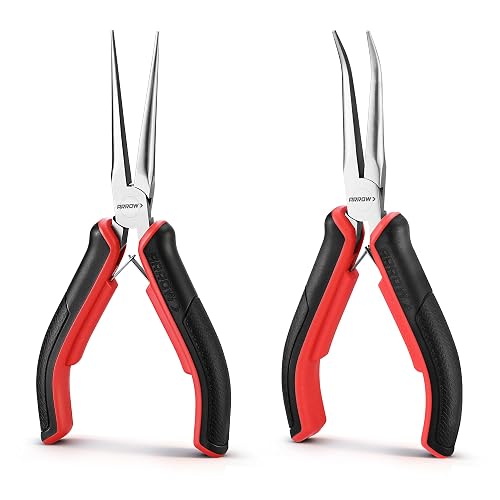 TOP CHOICEBest for fine wire workARROW 2-Piece 6" Needle Nose Pliers SetView on Amazon
- 4
 Best for gripping small partsARROW 6" Small Needle Nose PliersView on Amazon
- 5
 Best for holding and pulling hooksBerkley Hemostat Pliers (6")View on Amazon
Our Top Picks
Quick Comparison
| Product | Best for | Key feature |
|---|---|---|
| Beadsmith Wire Looping Pliers | Consistent loops and rings | Six loop sizes, 2–9mm |
| 5.8inch Bail Making Pliers 6 Step | Forming bails and eyes | Six graduated forming steps |
| ARROW 2-Piece Needle Nose Pliers Set | Fine wire bending | Long and bent nose pair |
| ARROW 6″ Small Needle Nose Pliers | Gripping small parts | Smooth jaws |
| Berkley Hemostat Pliers | Holding and releasing hooks | Locking hemostat design |
Beadsmith Wire Looping Pliers
Create 6 Sizes (Ranging 2-9mm) of Loops & Jump Rings, 5.5" long (140mm), Polished Steel Head & PVC Comfort Handle The Beadsmith Wire Looping Pliers
Best for: Consistent loops and rings
This suits anglers who build a lot of split rings or wire leaders and want repeatable loop sizes. The listing describes six loop sizes ranging from 2 to 9mm, with a 5.5-inch body and a PVC comfort handle.
Pros
- Multiple preset loop sizes for repeat work
- Comfortable PVC handle for longer sessions
Cons
- Looping jaws are less useful for general gripping
5.8inch Bail Making Pliers 6 Step
5.8inch Bail Making Pliers 6 Step
Best for: Forming bails and eyes
Good for anglers who make their own spinner bails or custom eye loops and want graduated forming steps rather than guesswork. It is a specialized tool, so it sits best alongside a general-purpose pair.
Pros
- Six forming steps for consistent bail shapes
- Compact 5.8-inch size fits a tackle box
Cons
- Narrow purpose; not a substitute for pliers
ARROW 2-Piece 6″ Needle Nose Pliers Set
Small Needle Nose Pliers, Jewelry Making, Wire Wrapping, Wire Bending, Small Object Gripping ARROW 2-Piece 6" Needle Nose Pliers Set, Mini Long & Bent Nose Pliers
Best for: Fine wire bending
A practical choice for anglers who bend thin wire, such as trace or small hook-eye work, and want both a straight and a bent nose option. Owners commonly mention the set covers most small wire tasks.
Pros
- Long and bent nose pair covers more angles
- Two tools in one set for varied tasks
Cons
- Thin jaws can flex under heavy wire
ARROW 6″ Small Needle Nose Pliers
Smooth Jaws, For Jewelry Making, Wire Bending, Small Object Gripping ARROW 6" Small Needle Nose Pliers, Mini Long Nose Pliers
Best for: Gripping small parts
This fits anglers who mostly need to grip, twist and hold small components like clevis pins, split rings and jig heads. Smooth jaws help avoid marring hardware.
Pros
- Smooth jaws protect finishes on lure hardware
- Slim profile reaches into tight spaces
Cons
- Not designed for forming loops
Berkley Hemostat Pliers (6″)
Berkley Hemostat Pliers (6"), Red
Best for: Holding and releasing hooks
A hemostat is useful for holding hooks, removing them from fish and tightening small connections. Anglers who want a locking tool for hook work often prefer this style over standard pliers.
Pros
- Locking jaws hold hooks securely
- Red handles are easy to spot on a boat deck
Cons
- Not a wire-bending tool
Buying Guide
Jaw Shape and Size
Needle nose jaws reach into tight spaces and bend wire at sharp angles, while looping tools create consistent rings. Match the jaw to the job: bending for eyes and trace, looping for split rings and leaders.
Good picks for this: ARROW 2-Piece 6″ Needle Nose Pliers Set, Beadsmith Wire Looping Pliers
Wire Gauge Compatibility
Thin, soft wire needs a finer jaw tip to avoid kinks, while heavier wire needs a sturdier body. Check the pliers’ jaw width against the wire you use most often.
Good picks for this: ARROW 6″ Small Needle Nose Pliers, 5.8inch Bail Making Pliers 6 Step
Grip and Handle Comfort
Repetitive bending can tire your hands, so look for comfortable handles and a secure grip. Smooth jaws also protect plated hardware from scratches.
Good picks for this: Beadsmith Wire Looping Pliers, ARROW 6″ Small Needle Nose Pliers
FAQ
Can I use these pliers to bend split rings on fishing lures?
Yes, the needle nose and looping styles both handle split ring work well. The narrow, smooth-tipped jaws let you open and close rings without scratching the finish on your lure. Choose a pair with a fine tip if you do this often.
What is the difference between looping pliers and needle nose pliers?
Looping pliers have tapered, stepped jaws designed to form consistent loops and jump rings in set sizes. Needle nose pliers have long, slim jaws that are better for gripping, bending by hand, and general wire work. Many anglers keep one of each on the tackle box.
Will these pliers work with thin fishing wire?
Most of these pliers are built for fine jewelry-grade wire, so they handle thin gauges comfortably. Thicker leader or heavier wire may strain the smaller jaws. Check the jaw size and wire range before buying for heavier tackle.
Do I need a bail making tool for lure work?
A bail making tool is useful if you build or repair crankbaits, spinners or jigs that use a wire bail or hook hanger. It forms a clean, even shape that is hard to match by hand. If you only tune hooks and rings, a standard needle nose pair is usually enough.
Are the handles comfortable for long tying sessions?
Handle comfort varies by model, with some featuring cushioned or coated grips and others using plain metal. Coated or padded handles reduce hand fatigue during extended use. Consider how long you typically work at the bench when choosing.
Should I keep my pliers from rusting after fishing trips?
Yes, rinse them with fresh water after saltwater use, dry them thoroughly, and apply a light coat of oil to the joint and jaws. Storing them in a dry tackle box helps prevent corrosion. Regular care keeps the jaws aligned and the pivot smooth.
Conclusion
If you want one dependable pair for most lure work, the Beadsmith Wire Looping Pliers suit anglers who form rings and loops regularly. The bail making pliers are the better pick for anyone building or repairing hardware that needs a consistent bail shape.
For general bending, gripping and small hook work, the ARROW needle nose options and the Berkley hemostat pliers offer practical, affordable choices. Match the jaw style to your most common task, and you will get the most value from your tools.
Related reading
- How to Use Split Ring Pliers for Fishing Lures: A Step-by-Step Guide
- 6 Best Snap Ring Pliers for Fishing Lures (2026)
- How to Use Fishing Pliers for Crimping, Cutting, and Hook Removal
- Fishing Pliers Buying Guide
- Fishing Line Crimping Pliers: A Step-by-Step Guide for Beginners
- Best Fishing Pliers
About Ethan Brooks
Ethan Brooks is part of our editorial team and reviews and edits our freshwater fishing tackle on a budget guides, checking product details against manufacturer specifications and owner feedback.