As an Amazon Associate I earn from qualifying purchases. This page may contain affiliate links.
The most effective fishing lures are the ones that match what fish are eating, how they are feeding, and how deep and how clear the water is. For most freshwater anglers, that means a small set of proven designs: spinnerbaits, crankbaits, jigs, soft plastic worms and swimbaits, and topwater plugs. Matching lure action and color to conditions matters more than owning dozens of options.
Why some lures outperform others
A lure catches fish by imitating something the fish already wants to eat, or by provoking a reaction strike. Some designs do both well. A jig trailed by a soft plastic crawfish imitates a natural food item that bottom-feeding bass encounter every day. A spinnerbait produces flash and vibration that trigger reaction strikes from fish that are not actively feeding. Lures that combine a believable profile with the right sound or movement tend to earn their reputation.
Shopping for one? See our guide: 5 Best Bass Assassin Fishing Lures for Bass Anglers (2026).
Lure design also controls how far a bait can be fished. A crankbait that dives to 8 feet covers water that a shallow square-bill cannot reach, and a jig that falls straight down gets bites from fish that ignore a fast-moving bait. The most effective lure is often the one that keeps the bait in the strike zone the longest.
Factors that decide which lure is most effective
Four variables do most of the work when choosing a lure:
- Water clarity. In clear water, fish have time to inspect a bait, so natural colors, smaller profiles and subtle action work best. In stained or muddy water, bright colors, chartreuse or white, and louder vibration help fish locate the lure.
- Water temperature. Cold water slows fish down. Slow presentations such as jigs, drop-shot rigs and suspending jerkbaits are usually more productive. Warm water and active fish respond better to fast-moving spinnerbaits, crankbaits and topwater baits.
- Depth. Match the lure’s running depth to where the fish are holding. Manufacturers list typical dive depths for crankbaits, and that number is a useful starting point, though actual depth varies with line diameter, line type and retrieve speed.
- Cover and structure. Weedless designs such as soft plastic frogs and punch-rigged baits work in grass and wood. Open water calls for lures that cover ground quickly.
How to choose and use effective lures
Start with a short list of versatile baits rather than a full tackle box of specialty lures. Pick one lure that runs shallow and fast, one that runs deep, one slow-fall bait, and one soft plastic that can be rigged several ways. Those four cover most situations on most lakes and rivers.
Then learn how each one works. Many lures fail not because they are poor designs but because the angler retrieves them at the wrong speed. A crankbait that is bumping rocks is doing its job at a slow, erratic pace, while a spinnerbait often needs to stay just above the cover. Experiment with speed for a few casts before deciding a lure is not working.
Practical steps
- Note the water temperature, clarity and approximate depth where fish are holding before you tie on anything.
- Start with a search lure, such as a spinnerbait or crankbait, to locate active fish quickly.
- When you get a strike, switch to a slower bait such as a jig or soft plastic to find out whether the fish want a more subtle presentation.
- Vary retrieve speed on every cast until you find the cadence that produces bites.
- Keep track of which lure, color and speed produced fish on each lake so your next trip starts smarter.
- Keep your hooks sharp and your baits clean, since a dull hook and a fouled lure lose more fish than the wrong color does.
What we’d use
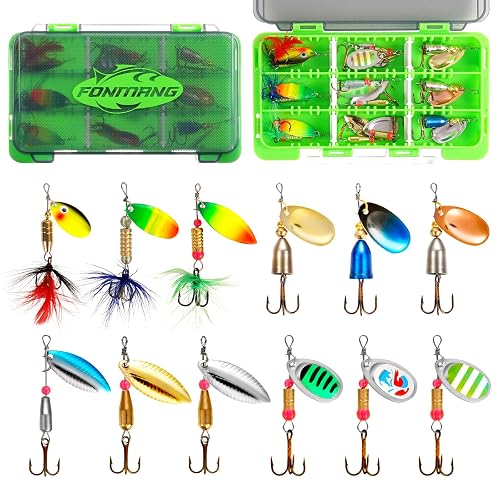
For a budget-minded starter set, a basic spinnerbait is a reliable search bait in stained water and warm conditions. View on Amazon
A lipless crankbait covers a lot of water quickly and works across seasons, especially in shallow to mid-depth lakes. View on Amazon
A soft plastic worm or creature bait rigged weedless or on a jig head is one of the most versatile slow-presentation options for bass. View on Amazon
If you want more detail on building a set of baits that fits your local waters, see How to Choose Fishing Lures for Different Fish and Water and Soft Plastic Fishing Lures Explained. For bass-specific picks by season, 7 Best Fishing Lures for Bass in Summer: 7 Picks Compared (2026) and Clear Water Bass Fishing Lures: 7 Proven Picks and How to Use Them are good next reads.
Related questions
What is the single best lure for beginners?
A spinnerbait or a soft plastic worm is a good starting point. Spinnerbaits are easy to fish and cover water, while worms are versatile and forgiving.
Do lure colors really matter?
Yes, but mostly in clear water, where natural tones tend to work. In murky water, bright or high-contrast colors help fish find the bait.
How do I know if a lure is running at the right depth?
Check the manufacturer’s listed dive depth, then test it. Make a cast, let it sink for a count, and retrieve. Adjust line diameter or retrieve speed if it runs shallower or deeper than expected.
Should I replace hooks on my lures?
Often, yes. Sharpening or replacing treble hooks with higher-quality ones improves hookup rates. Replace any hook that is bent or rusted.
How often should I clean my lures?
Rinse them after each trip, especially after saltwater or heavy vegetation, and wipe off slime and grime before storing. For tips on care, see How to Clean Fishing Lures for Better Performance.