 By Ethan Brooks
Updated November 2026
Pictures of fishing lures are one of the fastest ways to learn what a bait looks like in the water, how it moves, and whether it fits the fish you are chasing. In this guide, you will learn how to read a lure photo, identify the main lure families from images alone, compare color and size in a photo, and build a short shortlist before you buy. Along the way you will find a checklist, a comparison table and the mistakes that trip up most bargain-minded anglers.
Why Pictures of Fishing Lures Matter Before You Buy
A good photo tells you more than a product title ever will. A title might say “crankbait” or “soft plastic,” but a clear side-view image shows you the body shape, the lip angle, the hook placement and whether the finish is painted or translucent. Those details predict how a lure will swim, how deep it will run and how much weight it carries. When you are shopping on a budget, a few minutes spent studying photos can save you from buying three lures that all do the same job.
Shopping for one? See our guide: 5 Best Bass Assassin Fishing Lures of 2026: Picks Compared.
Photos also help you spot the difference between a fishing lure and a decorative item, a mislabeled hook or a packaging shot taken from an angle that hides the real profile. Look for images taken on a plain background, with a ruler or coin nearby if possible, and with at least one shot showing the lure from the side and one from the front or top.
How to Read a Lure Photo Step by Step
Use the same sequence every time you review an image. It takes about two minutes and gives you a consistent way to compare baits from different brands.
- Start with the silhouette. Is the body long and slender, round and compact, or flat and wide? Slender bodies usually suit fast retrieves and long casts. Compact, wide bodies tend to wobble or displace more water at slow speeds.
- Check the lip or bill. On crankbaits and minnow-style plugs, the lip angle controls how deep the lure dives. A steep, large lip dives deeper and tends to hit bottom or cover; a small or flat lip runs shallower.
- Look at the hook setup. Note whether the lure has treble hooks, a single hook, a weedless guard or an exposed hook. Treble hooks catch more fish but snag more often. Weedless designs suit grass and wood.
- Judge the size against a known reference. If the photo includes a coin, hand or ruler, estimate the length. Most listings state length in inches, but a visual check helps you match bait size to local forage.
- Study the finish. Solid painted finishes show well in clear water. Holographic foil and scale patterns flash in sunlight and suit stained or deeper water. Translucent bodies look natural in clear conditions.
- Examine the eyes and details. Painted eyes, rattles visible through a cutaway, or a segmented body usually indicate a specific action. Note these before assuming what a lure does.
Identifying Lure Types From Images
Most lures fall into a handful of families. Once you can recognize these in a photo, you can narrow a search quickly and skip irrelevant listings.
Hard Baits
Hard baits include crankbaits, jerkbaits, minnow plugs and topwater poppers. In photos, look for a rigid body, a visible lip on crankbaits, and eyes or painted scales on realistic models. Jerkbaits are usually long and thin with no lip. Topwaters often have a concave face or a flat, cupped front.
Soft Plastics
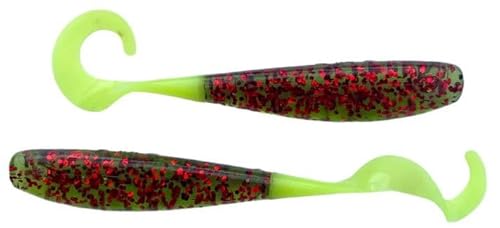
Soft plastics appear as worms, grubs, swimbait paddle tails, creature baits and craws. Their photos often show ribbing, flared tails or segmented bodies. Check whether the tail is paddle-shaped, curly or straight, since tail shape changes the action dramatically.
Metal Lures
Spoons, spinnerbaits and blades show reflective surfaces in photos. A spoon is a single curved piece of metal, often with a treble or single hook at the rear. A spinnerbait has a wire frame, a skirt and one or more spinning blades. Blade shape (Colorado, willow or indiana) shows up clearly in a side view.
Jigs and Jig Heads
Jigs look like a weighted head with a hook and a skirt or trailer. Lead or tungsten heads appear as a solid mass with a visible hook eye. Jig heads sold without a skirt show only the bare head and hook.
Comparing Color, Size and Finish in Photos
Color names in listings are often inconsistent. “Ghost minnow” from one brand may look nothing like the same name from another. Compare the actual pixels in several photos rather than trusting the label.
Photos taken in bright sunlight wash out subtle tones, while photos under warm indoor lights shift greens and blues. Look for multiple images in different lighting if the listing provides them. For natural finishes, a photo of the lure next to real baitfish gives the most reliable color reference.
Size matters as much as color. A 3-inch soft plastic and a 5-inch one can look similar at thumbnail size. Always check the stated length, and match it to the forage in your water. Bass in lakes with abundant gizzard shad often respond better to larger profiles, while panfish and smaller species respond to compact baits.
Comparison Table: Common Lure Types in Photos
| Lure type | What the photo shows | Typical use |
|---|---|---|
| Crankbait | Hard body with a visible lip | Covering water to locate fish |
| Jerkbait | Long, slender hard body, no lip | Pausing and twitching in clear water |
| Topwater popper | Concave or cupped front face | Surface strikes at dawn and dusk |
| Spinnerbait | Wire frame with blades and skirt | Reaction strikes in stained water |
| Spoon | Single curved metal piece | Flutter fall and trolling |
| Soft plastic swimbait | Paddle or curly tail on soft body | Slow rolling and jig trailers |
| Jig | Weighted head with skirt or trailer | Bottom contact and cover |
A Checklist for Shopping With Lure Photos
- At least two clear images, including one side view
- A stated length and weight that matches what you see
- A finish that suits your water clarity
- Hook type that fits your cover (weedless for grass, standard for open water)
- Consistent color across multiple photos, not just the thumbnail
- A listing that names the lure type clearly, not just a brand code
- Reviews or user photos showing the lure in real conditions, where available
Common Mistakes When Using Lure Pictures
Several habits lead anglers to buy the wrong bait, even with plenty of photos to look at.
- Trusting one photo. Retouched or staged images can exaggerate color and gloss. Compare at least two angles.
- Ignoring scale. A lure that looks perfect in a close-up may be too large or too small for your forage.
- Confusing similar names. Two lures with nearly identical names can have very different lip sizes or weights.
- Overlooking hook quality. Photos rarely show hook strength. If the listing gives a hook size or steel grade, note it.
- Buying for color alone. Shape and action affect strikes more than color in many situations.
Tips for Building a Smart Lure Shortlist
Save photos of three to five lures that match your target species and water type. Compare them side by side on one screen and rank them by silhouette, size and finish. This gives you a focused set to test rather than a cart full of duplicates.
If you fish mostly one species, pick colors that mimic the local forage, such as shad patterns for largemouth bass in reservoirs or crawfish tones for smallmouth in rocky rivers. Keep notes on what works in your water so future photo comparisons go faster.
Recommended gear
A few supplies make photo-based lure comparison and storage easier. Pick the items that match how you fish.
- Small clear tackle boxes with dividers. Clear lids let you match what you see in photos with the actual baits you own. View on Amazon
- A digital luggage or fishing scale. Confirms lure weight, which listings sometimes state inaccurately. View on Amazon
- A small magnifying loupe. Helps inspect hook sharpness, paint finish and split rings when the photo is not clear enough. View on Amazon
- A lure-organizing tray or foam insert. Keeps hooks separated so baits stay sharp and easy to match to photos. View on Amazon
FAQ
Where can I find reliable pictures of fishing lures?
Manufacturer websites and retailer listings with multiple angles tend to be the most accurate. User-submitted photos from anglers fishing the lure in real conditions can add useful context on color and size.
How can I tell a crankbait from a jerkbait in a photo?
Crankbaits usually have a visible lip or bill at the front that angles downward. Jerkbaits are typically long and slender with no lip, and they often have a more streamlined profile.
Does lure color matter as much as the photo suggests?
Color matters, but shape, size and action often matter more. Water clarity and light conditions change how colors appear, so treat color as one factor among several.
Why does a lure look different in person than in the picture?
Camera flash, lighting, screen calibration and retouching all alter color and gloss. Lures can also look different when wet, since water changes how finishes reflect light.
What lure size should I start with for bass?
Many anglers start with lures in the 3- to 5-inch range for soft plastics and 3- to 4-inch range for hard baits, then adjust based on forage size and fish response in their water.
Can I identify a lure’s depth from a photo?
For crankbaits, the lip size and angle give a good clue. Manufacturers usually list a running depth range, which is more reliable than estimating from the image alone.
Are vintage lure photos useful for buying modern lures?
Vintage photos can help you recognize classic shapes and finishes, but modern versions may differ in hooks, materials and action. Check current specifications before buying.
Should I consult anyone before buying specialty lures?
For targeted species or regulated waters, check local fishing regulations and ask a licensed bait shop or guide about legal lure types and sizes where you plan to fish.
Conclusion
Pictures of fishing lures reveal shape, size, finish and hook setup, which are the details that determine how a bait performs. Read each photo in the same order, compare multiple angles and check stated dimensions against the forage in your water. A short, well-chosen shortlist beats a cart full of similar baits, so use photos to narrow your options before you spend.
Related reading
- Z Man Fishing Lures: How to Choose and Fish Them for Bass
- X Zone Fishing Lures: How to Choose and Fish Them for Bass (2026)
- X Rap Fishing Lures (2026): Pros, Cons & Verdict
- Wedding Rings Fishing Lures: 6 Best Picks for Walleye and Trout Rigs
Ready to choose one?
About Ethan Brooks
Ethan Brooks is part of our editorial team and reviews and edits our freshwater fishing tackle on a budget guides, checking product details against manufacturer specifications and owner feedback.