
 By Claire Whitaker
Updated November 2026
The penn squall ii star drag conventional fishing reel is aimed at anglers who want a straightforward, dependable conventional reel for saltwater-adjacent work, heavy freshwater species, and general bottom or trolling duty without paying premium money. It suits beginners stepping up from spinning gear, budget-minded anglers who fish a few times a month, and anyone who values a simple star drag over complicated braking systems. It is a weaker choice for tournament anglers who need fine casting control, ultralight finesse fishing, or long-term use in harsh salt conditions where a sealed, higher-tier reel would hold up better over years.

PENN Squall II Star Drag Conventional Fishing Reel
Product Overview
The PENN Squall II is part of a long-running line of PENN conventional reels that have been a fixture in tackle shops for decades. PENN is a well-established American fishing brand, and the Squall II series is positioned as an entry-to-mid level option that borrows the general layout of the company’s better-known reels. The star drag version uses a star-shaped adjustment knob on the side of the reel to set drag pressure, which is the most common drag style on conventional reels of this type. If you want more background, see Penn Squall Lever Drag Conventional Fishing Reel Review: Is It Worth It?.
Conventional reels differ from spinning and baitcasting reels in one important way: the spool sits below the rod and rotates as line is retrieved, and most models are designed for heavier line and heavier lures or bait. If you are still deciding between reel types, the guide to Types of Fishing Reels: Spinning, Baitcasting, Spincast and Conventional explains where conventional gear fits. The Squall II is meant for anglers who want that heavier-duty platform in a package that is easy to set up and maintain.
The reel’s appeal is mostly about fundamentals: a solid drag, a usable line capacity for common species, and a design that does not ask much of the user. Owners often describe it as a reliable everyday reel rather than a specialty tool, which is the right way to think about it.
Key Features & Specifications
Manufacturers specify the following characteristics for this product family. Exact figures can vary by version, so confirm the gear ratio, line capacity, and weight on the listing you are buying before purchase. For a deeper look, Fishing Reel Drag Explained: How to Set It covers this in detail.
| Feature | What It Means for You |
|---|---|
| Reel type | Conventional (overhead, spool below the rod) |
| Drag system | Star drag, adjusted with a side-mounted knob |
| Drag function | Controls line release under load to protect light line and hooks |
| Target use | Freshwater and inshore species, bottom fishing, trolling |
| Line capacity | Listed by the manufacturer; check the specific model for pound test and yardage |
| Gear ratio | Listed by the manufacturer; a higher ratio retrieves line faster per crank |
| Build | Typically a mix of metal and composite components in the body and spool |
| Brand | PENN, a long-established American fishing tackle company |
The star drag is the headline feature. Unlike a lever drag, a star drag is adjusted by turning a knob with your thumb, and it is generally easier to fine-tune between strikes. Anglers who want to learn how drag affects hookups and line breakage should read Fishing Reel Drag Explained before setting this reel for the first time.
Pros & Cons
Pros
- Star drag offers simple, repeatable adjustment that is easy for beginners to learn.
- PENN’s brand reputation means replacement parts and service information are widely available.
- Suitable for a broad range of species, from panfish-sized bait work to larger fish on heavier line.
- Straightforward design with fewer moving parts to troubleshoot than more complex reels.
- Fits anglers who want a dependable reel without a premium-tier commitment.
Cons
- Conventional reels take practice to cast without backlash, and this model is no exception.
- Not a finesse reel; anglers targeting small lures on light line will be better served elsewhere.
- Owners who fish in heavy salt spray often recommend extra rinsing and lubrication to prevent corrosion.
- Build materials are sensible for the price tier but not as refined as higher-end PENN lines.
- Line capacity and gear ratio should be verified carefully against your target species.
Performance Analysis
Because this is a research-based review, the performance picture below draws on the manufacturer’s specifications and the patterns that tend to appear in owner feedback for reels in this class. It is not based on hands-on testing.
Drag performance. The star drag is the component most owners discuss. Feedback commonly describes it as smooth enough for typical freshwater and light inshore fights, with adjustment that holds once set. Anglers pulling hard runs from big fish should back the drag off slightly when a fish first takes the bait, then tighten as the fight develops. Owners who push the drag too tight from the start often report line breakage at the knot rather than drag failure. A related read: Penn Squall Star Drag Conventional Fishing Reel Review: Is It Worth It?.
Retrieve and gearing. A conventional reel’s gear ratio determines how fast line comes in with each crank. Reels in this family are generally geared for steady retrieves rather than rapid-fire lure work. For bottom fishing and slow trolling, that is an advantage. For fast topwater or spinnerbait-style presentations, a faster reel may be more comfortable.
Casting. Casting a conventional reel is a learned skill. Owners who spend time learning thumb control and spool tension tend to report fewer backlash tangles. Those who expect spinning-reel ease from day one often find it frustrating at first. Setting the spool tension and braking correctly, and practicing with heavy sinkers in an open area, makes the biggest difference.
Durability. Owner reports on conventional reels in this price tier often mention that longevity depends heavily on rinsing after saltwater trips and periodic lubrication. For guidance on keeping the gears and drag working smoothly, see How to Maintain a Fishing Reel and Common Fishing Reel Problems and How to Fix Them.
Line management. Line choice matters as much as the reel. Monofilament and braided lines behave differently on a conventional spool, and matching line diameter to your drag setting prevents many common failures. The article Understanding Conventional Reel Line Capacity and Uses walks through how to match line to reel.
Who Should Buy This Product?
This reel is a sound choice for beginners who want to learn conventional fishing without buying a top-tier setup, for anglers who fish bottom rigs for catfish, bream, or similar species, and for families or occasional anglers who want one dependable reel that will not need constant attention. It also works for light trolling and inshore use where drag control matters more than casting finesse.
You should skip this reel if your main target is bass on lightweight lures, if you cast small plugs for long distances in open water, or if you fish heavy salt daily and expect a reel to last years without much maintenance. Anglers in those situations will get more value from a reel built for their specific technique.
Buying Guide
Before buying any conventional reel, match the reel to the fish and the technique, not just to a brand name. Check the line capacity against the pound test and yardage your target species requires. Confirm the gear ratio fits your retrieve style. Decide whether you need a star drag or a lever drag; star drags are simpler to adjust, while lever drags are sometimes preferred for heavy-duty applications. And consider how often you will fish saltwater, since that affects how much corrosion resistance you should expect.
For budget decisions, the guide to Budget vs Premium Fishing Reels is worth reading, and How to Choose a Fishing Reel covers the broader checklist. If you want a wider list to compare, 15 Best Fishing Reels with Drag gives context on how drag systems vary across models.
Two well-known alternatives are worth comparing directly against this reel. Each is listed below with its product card and Amazon link.
The Squall II Star Drag Conventional Reel (SQLII12SD) is a close relative in the same family, and owners often compare it directly to the PENN version when deciding between models. Review its listing for the exact specifications that match your target species.

Squall II Star Drag Conventional Reel – SQLII12SD [1522163]
The PENN Squall II Level Wind Conventional Fishing Reel is the level-wind variant, which automatically guides line evenly across the spool. Anglers who want even line lay and less manual management often consider this version, while those who prefer simpler mechanics may stick with the star drag model.
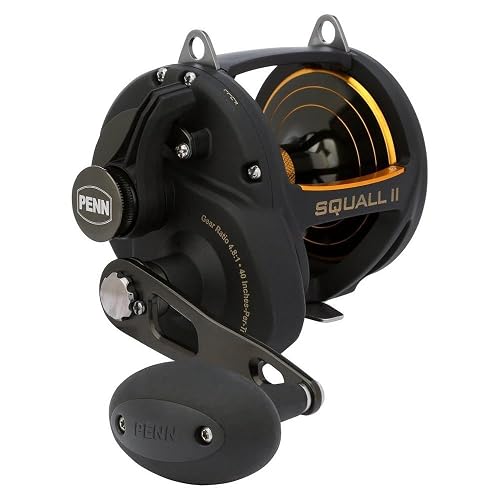
PENN Squall II Level Wind Conventional Fishing Reel
FAQ
Is the PENN Squall II good for beginners?
Yes, for many beginners it is a practical choice. The star drag is simple to adjust, and the design has fewer components to think about than more advanced reels. Expect a learning curve with casting, and practice in an open space with a light sinker before fishing around obstacles.
Can this reel handle saltwater fishing?
It can be used in lightly salty or brackish conditions, and many anglers use conventional reels of this class for inshore work. Owners generally recommend rinsing with fresh water after each trip and lubricating moving parts regularly. Heavy daily saltwater use may call for a reel with better sealing.
What line should I put on a Squall II?
Match the line to your target species and the reel’s stated capacity. Monofilament is forgiving and easy to handle for beginners, while braided line offers thinner diameter and more sensitivity but requires careful spooling and a suitable leader. Check the manufacturer’s line recommendations on the listing.
How do I set the star drag correctly?
Set the drag so that it releases line under firm pressure, roughly a fraction of your line’s breaking strength, then test by pulling line off the spool by hand. Many anglers set the drag lighter than they expect and tighten during the fight. The guide How to Adjust and Maintain Your Reel's Drag System covers this step by step.
Why does my conventional reel backlash when I cast?
Backlash usually comes from spool tension set too loose, thumb pressure applied too late, or casting with too much force for your lure weight. Adjust the spool brake, practice thumb control, and start with heavier lures until your timing improves.
How often should I service this reel?
Rinse and dry after saltwater use, and lubricate gears and bearings periodically, following the manufacturer’s maintenance notes. Owners who fish regularly often service their reels once or twice a season. A consult with a local tackle shop or repair professional is wise if the drag or gears start to feel rough.
Does the Squall II work for catfish?
It is commonly used for bottom fishing species such as catfish, provided the line capacity and drag strength match the size of fish you expect. Heavier catfish may call for a larger reel with more line capacity.
Final Verdict
The penn squall ii star drag conventional fishing reel is a dependable, approachable conventional reel that does its core job well. Its star drag is easy to learn, its PENN brand provides good parts and service support, and it covers a broad range of freshwater and light inshore uses. It is not a finesse reel and it will reward anglers who take time to learn casting control and maintenance. For beginners and bottom-fishing anglers on a budget, it is a sensible buy; for those needing light-lure precision or heavy daily salt use, look at the alternatives above first.
About Claire Whitaker
Claire Whitaker is part of our editorial team and reviews and edits our freshwater fishing tackle on a budget guides, checking product details against manufacturer specifications and owner feedback.




