
 By Claire Whitaker
Updated November 2026
Choosing an okuma spinning fishing reel comes down to where you fish, what species you chase and how much drag and gear ratio you actually need. This list narrows seven Okuma and Safyre-line options by use case, weighing sealing, drag system, gear design, ball bearing count and fit for freshwater or inshore work.
Our top picks at a glance
- 1
 TOP CHOICEBest overallOkuma Safyre SF-1000AView on Amazon
- 2
 TOP CHOICEBest for saltwater baitfeedingOKUMA Avenger ABF Graphite Baitfeeder Saltwater Spinning ReelView on Amazon
- 3
 TOP CHOICEBest for light all-purpose useOKUMA Ceymar Graphite Lightweight All Purpose 8BB Spinning ReelView on Amazon
- 4
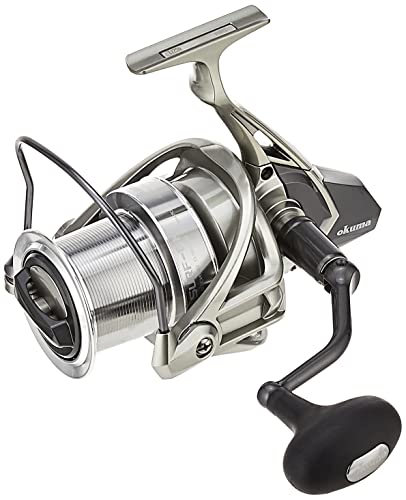 Best for surf fishingOKUMA Reels Surf 8K Spinning 5Bb+1Rb 4.7:1, MulticolorView on Amazon
- 5
 Best for mid-size freshwaterSafyre 5000 Spinning ReelsView on Amazon
- 6
 Best for budget-minded anglersSafyre Spinning ReelsView on Amazon
- 7
 Best for small-stream troutCeymar Spinning ReelsView on Amazon
Our Top Picks
Quick Comparison
| Product | Best for | Key feature |
|---|---|---|
| Okuma Safyre SF-1000A | Freshwater and inshore | Sealed IPX-3 body |
| Okuma Avenger ABF | Saltwater baitfeeding | Graphite body and sealed drag |
| Okuma Ceymar Graphite | Light all-purpose use | Lightweight graphite frame |
| Okuma Surf 8K | Surf fishing | High-capacity 8K spool |
| Safyre 5000 | Mid-size freshwater | Balanced 5000 size |
| Safyre Spinning Reel | Budget-minded anglers | Simple, easy setup |
| Ceymar Spinning Reel | Small-stream trout | Compact, light build |
Okuma Safyre SF-1000A
OKUMA Safyre Spinning Reel for Freshwater & Inshore Fishing – Sealed IPX-3 Body, Carbonite Multi-Disc Drag, 8BB, HDG+ High-Density Gearing, SF-1000A
Best for: Freshwater and inshore fishing
Owners who want one reel for bass, walleye and light inshore work often point to its sealed body and smooth drag. It suits anglers who fish in rain, spray or muddy water and want a single well-rounded setup.
Pros
- Sealed IPX-3 body resists water and grit
- Carbonite multi-disc drag with 8 bearings
Cons
- Heavier than the ultralight Ceymar models
OKUMA Avenger ABF Graphite Baitfeeder Saltwater Spinning Reel
OKUMA Avenger ABF Graphite Baitfeeder Saltwater Spinning Reel
Best for: Saltwater baitfeeding
Anglers targeting saltwater species from a boat or jetty often choose this model for its corrosion-resistant build. It fits people who want a dedicated baitfeeder setup without a premium price tag.
Pros
- Graphite body resists saltwater corrosion
- Smooth sealed drag for larger fish
Cons
- Bulkier than freshwater-focused reels
OKUMA Ceymar Graphite Lightweight All Purpose 8BB Spinning Reel
OKUMA Ceymar Graphite Lightweight All Purpose 8BB Spinning Reel
Best for: Light all-purpose use
Owners fishing panfish, trout and light lures often mention how little the reel weighs in hand. It works well for anglers who spend long days casting and want less fatigue.
Pros
- Lightweight graphite frame reduces fatigue
- Eight ball bearings for smooth retrieves
Cons
- Not built for heavy saltwater use
OKUMA Reels Surf 8K Spinning 5Bb+1Rb 4.7:1, Multicolor
OKUMA Reels Surf 8K Spinning 5Bb+1Rb 4.7:1, Multicolor, One Size
Best for: Surf fishing
Surf anglers casting long distances over sand often look for line capacity and a reel that handles sand well. This larger size suits people fishing from beaches with heavier line. Worth reading next: Parts for Shakespeare Fishing Reel: 5 Best Replacement Picks (2026).
Pros
- 8K size holds plenty of line for surf work
- Gear ratio of 4.7:1 gives a steady retrieve
Cons
- Too large for light freshwater tactics
Safyre 5000 Spinning Reels
Safyre 5000 Spinning Reels
Best for: Mid-size freshwater
Anglers chasing bass and pike on rivers and lakes often find the 5000 size balances casting weight and line capacity. It suits people who want one reel for general freshwater use.
Pros
- Versatile size for many freshwater species
- Simple setup for everyday fishing
Cons
- Fewer specialty features than the SF-1000A
Safyre Spinning Reels
Safyre Spinning Reels
Best for: Budget-minded anglers
Beginners and families buying a second rod often choose this model for its straightforward design. It is a sensible pick for anglers who want a dependable reel without extras.
Pros
- Straightforward design is easy to learn
- Good starting point for new anglers
Cons
- Basic drag may not suit larger fish
Buying Guide
Sealing and Water Resistance
Think about where you will actually fish. Reels with sealed bodies keep sand, salt spray and rain out of the gears and bearings, which matters most for surf, inshore and boat work. For occasional freshwater trips on calm lakes, a less heavily sealed reel is usually fine and keeps things simpler to maintain.
Rinse saltwater gear with fresh water after every trip, even on sealed models, to extend its life.
Drag System Strength
The drag is what lets a reel handle a hard-running fish without breaking your line. Look for a smooth, adjustable system with enough stopping power for the species you target. Freshwater panfish need far less drag than larger saltwater species or heavy-cover bass.
Match the drag rating to your line strength, so the drag slips before the line fails.
Gear Ratio and Retrieve Speed
Gear ratio tells you how many times the spool turns per handle crank. A higher ratio retrieves line faster, which suits topwater lures and quick presentations. A lower ratio gives more cranking power, which helps when working heavier lures or fighting fish close to the boat.
If you are unsure, a middle-range ratio is a versatile starting point for most anglers.
Bearings and Smoothness
Ball bearing count affects how smoothly the reel spins and how it feels during a long session. More bearings generally mean a smoother retrieve, but build quality and gear design matter just as much as the raw number. A well-built reel with fewer bearings can outperform a poorly built one with more.
Size, Weight and Line Capacity
Match the reel size to your rod and target species. Lightweight reels reduce fatigue on all-day trips and balance well on smaller rods, while larger reels hold more line and handle heavier loads. Check line capacity against the fish you plan to catch so you are never caught short on a long run.
FAQ
Which Okuma spinning reel is best for beginners?
A lightweight, all-purpose model is usually the easiest place to start because it is comfortable to cast and simple to learn on. It handles a wide range of lures and species without requiring specialized setup. Once you know what you fish for most, you can move up to a more targeted reel.
Are Okuma spinning reels good for saltwater fishing?
Several models in this lineup are built with sealing and corrosion resistance that suit saltwater use. Rinse the reel with fresh water after each outing and lubricate it regularly to keep it working well. Choosing a sealed body and a drag system rated for your target species makes a big difference.
What gear ratio should I choose for a spinning reel?
A medium gear ratio works well for most general fishing, since it balances retrieve speed and cranking power. Higher ratios suit fast retrieves with light lures, while lower ratios help when you need more force. Think about the lures you use most and choose accordingly.
How much line capacity do I need?
Choose a reel whose line capacity matches the species you target and the line strength you plan to use. Larger fish and open water call for more line, while small freshwater species need less. Always check the manufacturer’s stated capacity for the line diameter you intend to spool.
How do I maintain an Okuma spinning reel?
Rinse the reel after saltwater trips, dry it thoroughly and avoid soaking it. Apply a light amount of appropriate lubricant to the gears and bearings at regular intervals, and store the reel in a dry place. Regular care keeps the drag smooth and the retrieve consistent for years.
Conclusion
If you fish mainly in saltwater or rough conditions, a sealed, drag-focused model is the best fit, while anglers who want one reel for many species should consider a lightweight all-purpose option. Those who focus on baitfeeding or specific surf work will get the most value from a reel designed for that style.
Match your choice to your target species, fishing location and typical lure weight, and the right Okuma spinning reel will serve you well across many seasons.
Related reading
- Types of Fishing Reels: Spinning, Baitcasting, Spincast and Conventional
- Shimano Spinning Fishing Reel Review: Vanford A Features and Pros
- Conventional vs Spinning Reel for Bottom Fishing (2026): Which Should You Choose?
- Conventional or Spinning Reel for Bottom Fishing: Which Should You Choose?
About Claire Whitaker
Claire Whitaker is part of our editorial team and reviews and edits our freshwater fishing tackle on a budget guides, checking product details against manufacturer specifications and owner feedback.


