 By Ethan Brooks
Updated November 2026
The best bass and trout lures share a few traits: they imitate common forage, they work at more than one depth or speed, and they hold up to repeated casts. This guide shows you which lure types cover both species, how to choose colors and sizes, and where to spend your first dollars so one small tackle box handles most days on the water.
Start With Lures That Cover Both Species
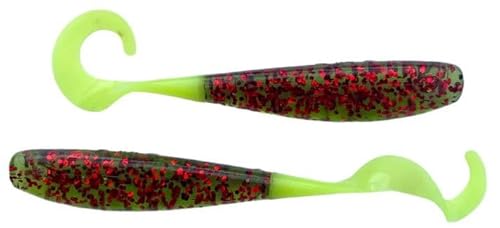
Bass and trout both eat small baitfish, crawfish, and insects, so a handful of lures can cover both. Focus on a few versatile categories rather than buying one lure for every situation. Inline spinners, small crankbaits, soft plastic jerkbaits, and small spoons are the core of most budget boxes. If you want a broader look at specific designs, our guide to 7 Best Paddle Tail Fishing Lures for Bass and Trout (2026) and 5 Best Inline Spinner Fishing Lures for Trout and Bass (2026) go deeper on individual models.
Match Size and Color to the Water
Size matters more than most beginners expect. For trout, lures in the 1/16 to 1/8 ounce range or 2 to 3 inches long are usually enough. Bass will take larger offerings, so 3 to 4 inch soft plastics and 1/4 to 3/8 ounce spinners are common starting points.
Color choice follows water clarity:
- Clear water: natural tones such as silver, brown, green, and white.
- Stained or murky water: high-contrast colors like chartreuse, orange, or bright white.
- Low light: darker profiles or lures with a reflective flash help them show up. For dusk-specific picks, see 5 Best Lures for Night Fishing: Picks for Low-Light Bass and Trout.
Work the Retrieve, Not Just the Lure
A good lure fails if the retrieve is wrong. Use these steps on any cast:
- Cast past your target and let the lure sink to the strike zone.
- Start with a steady retrieve at a moderate speed.
- If nothing hits after 10 to 15 casts at one depth, change speed or depth.
- Pause the lure for 2 to 3 seconds near structure, since many strikes happen on the fall.
Adjust for Each Species
Trout often respond to slower, steadier retrieves and smaller profiles. Bass respond well to faster presentations and erratic twitches that trigger reaction strikes. Using the same lure with both approaches often produces fish from both species in one outing. If you want more background, see 5 Best Yamamoto Senko Lures for Bass Anglers (2026).
Build a Starter Box That Covers Both Fish
A practical starter kit can be assembled from a short list. The table below summarizes what each category does best.
| Lure type | Best for | Typical water |
|---|---|---|
| Inline spinner | Trout and bass, mid-column | Streams and lake edges |
| Small crankbait | Bass and trout, active fish | Shallow to mid-depth |
| Soft plastic jerkbait | Bass, trout in lakes | Clear to stained water |
| Small spoon | Trout, bass in open water | Lakes and slow runs |
Common Mistakes to Avoid
- Buying dozens of lures before learning which ones your local fish prefer.
- Using oversized lures for trout, which often spooks them.
- Ignoring color changes when water clarity shifts after rain.
- Reeling at one speed all day instead of varying the retrieve.
- Skipping hooks checks; replace dull or bent hooks before every trip.
Recommended Gear
A few supplies make a bigger difference than any single lure. A small clip-on rod tip light helps you see strikes at dusk, and a basic tackle box with adjustable dividers keeps your favorite lures organized. For a fast way to try new sizes and colors without filling your box, consider a compact lure assortment. For a deeper look, 6 Best Drop Shot Lures for Bass Anglers in 2026 covers this in detail.
- Rod tip light for low-light strike detection: View on Amazon
- Tackle box with adjustable dividers: View on Amazon
- Assorted inline spinner kit for bass and trout: View on Amazon
FAQ
Can one lure catch both bass and trout?
Yes. Small inline spinners, crankbaits, and soft jerkbaits regularly attract both species when sized and retrieved correctly. Adjust the speed and depth for each fish. Worth reading next: 7 Best Sand Bass Lures for Budget Anglers (2026).
What size lure should I start with?
For mixed bass and trout water, start around 1/8 to 3/16 ounce spinners or 3 inch soft plastics. Scale up or down based on what you see hitting.
Do I need different colors for different water?
Often, yes. Natural colors suit clear water, while bright or high-contrast colors work better in stained or murky conditions. Local regulations and water conditions may also affect your choices, so check current guidance from your state fish and wildlife agency.
Conclusion
The best bass and trout lures are the ones you can fish well across different water. Start with a few versatile categories, match size and color to the conditions, and practice varying your retrieve. A small, focused box will outfish a large, random one every time.
Related reading
- Vintage Metal Fishing Lures: 6 Best Picks for Bass and Trout Anglers
- Pistol Pete Fishing Lures: 5 Best Picks for Bass and Trout Anglers
- Old Wood Fishing Lures: 7 Best Picks for Classic Bass and Trout Fishing
Ready to choose one?
About Ethan Brooks
Ethan Brooks is part of our editorial team and reviews and edits our freshwater fishing tackle on a budget guides, checking product details against manufacturer specifications and owner feedback.